
Pests That Overwinter in Walls and the Signs They Leave Behind
Pests That Overwinter in Walls and the Signs They Leave Behind
Summary: Stink bugs, boxelder bugs, Asian lady beetles, cluster flies, and mice all use wall voids to get through a Northern Virginia winter. This guide explains how each one gets in, the signs that separate a sleepy insect problem from an active rodent problem, and how to handle them without making things worse.
A stink bug crawling up the living room window in January makes no sense at first. The doors have been shut for months, nothing new has come into the house, and yet there it is, slow and a little confused, with a few more turning up near the lamps over the next week. Most of the time, that bug has been inside all along, tucked into a wall void since October.
This guide covers the pests that overwinter in walls across Northern Virginia, why those hidden spaces appeal to them, how to tell an insect problem from a rodent problem, and what actually helps once they are already inside. A few of these are mostly a nuisance. One of them is worth acting on quickly.
Why the Space Behind Your Drywall Appeals to Them
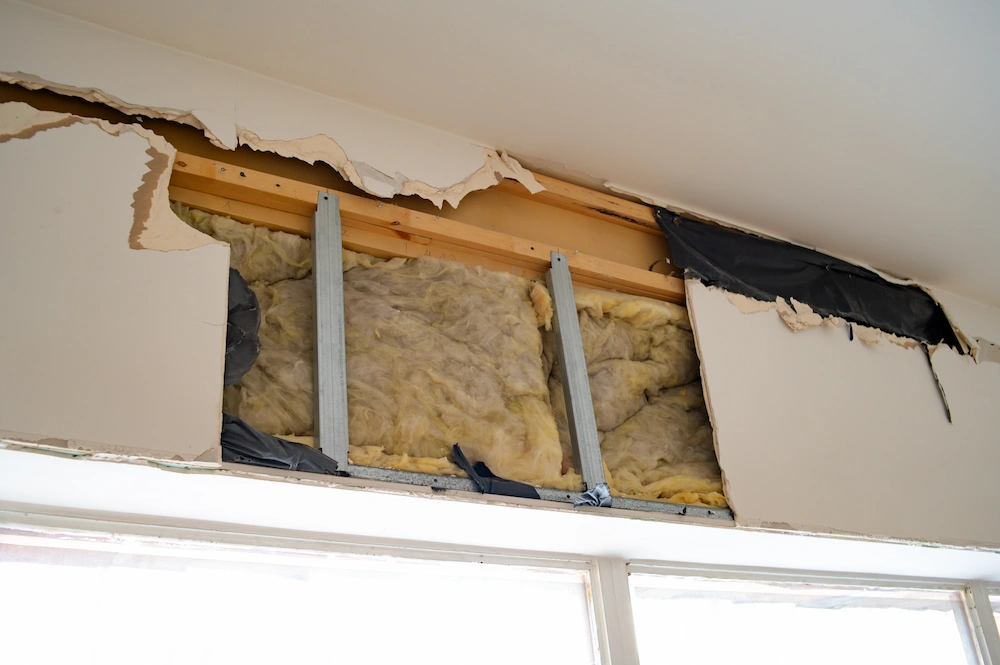
The cavity between an exterior wall and the interior drywall is dark, dry, insulated, and rarely disturbed. On a cold night it stays warmer than the outside air, thanks to heat leaking from the living space, but it never gets warm enough to fully wake a dormant insect. For a bug looking to ride out winter, that is close to ideal.
Most of the insect pests that overwinter in walls enter a resting state called diapause, where their metabolism slows way down and they stop feeding. So they do not need food in the wall, only a protected spot. A typical house offers plenty of ways in: gaps around window and door frames, loose siding seams, openings where cable, gas, and AC lines pass through, damaged attic or soffit vent screens, and weep holes along the bottom of brick veneer.
Timing around here is fairly predictable. As nights cool in late September and October, insects gather on the sunny south and west sides of homes, soaking up warmth before they look for cracks. Houses in Reston, Herndon, and Ashburn with a lot of tree cover close by tend to see more of it, since many of these insects spend the summer feeding in nearby trees and gardens.
The Insects Most Likely Sleeping in the Walls
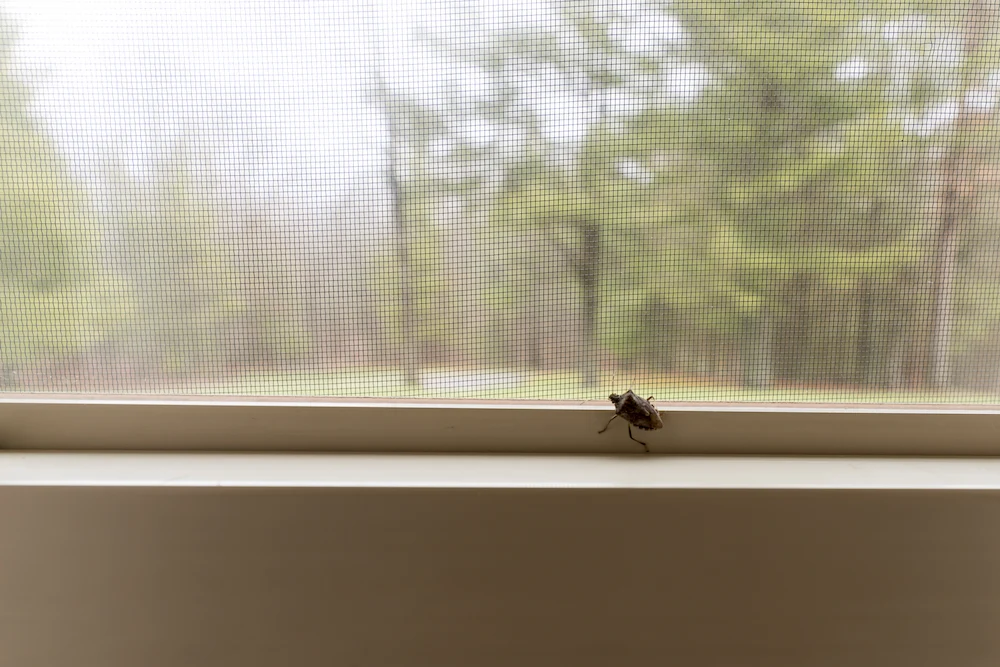
Brown Marmorated Stink Bugs
These are the ones most Northern Virginia homeowners already know. The brown marmorated stink bug is an invasive species from East Asia, shield-shaped and mottled brown, and it is famous for the odor it releases when crushed or disturbed. In fall they cluster on siding and window frames, then slip into wall voids and attics, sometimes by the dozens.
Inside, they do not breed, bite, or damage wood or wiring. The trouble comes on warm winter afternoons or when the furnace kicks on, which can rouse a few of them enough to wander out around outlets, light fixtures, and window trim. Seeing one or two a week all winter is common in homes that had heavy fall activity.
Boxelder Bugs
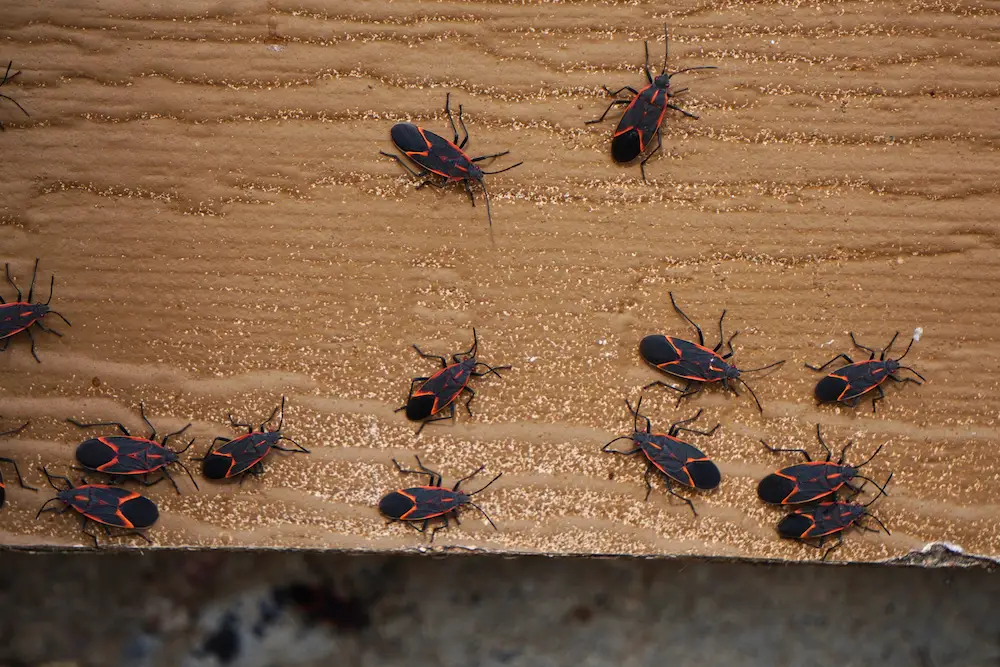
Boxelder bugs are black with red or orange markings along the edges of the wings, and they feed mostly on the seeds of boxelder and some maple trees. Properties with those trees nearby can see large groups sunning themselves on a warm wall in October. Like stink bugs, they do not reproduce indoors, but their droppings can leave small reddish stains on curtains and light-colored surfaces.
Asian Lady Beetles and Cluster Flies
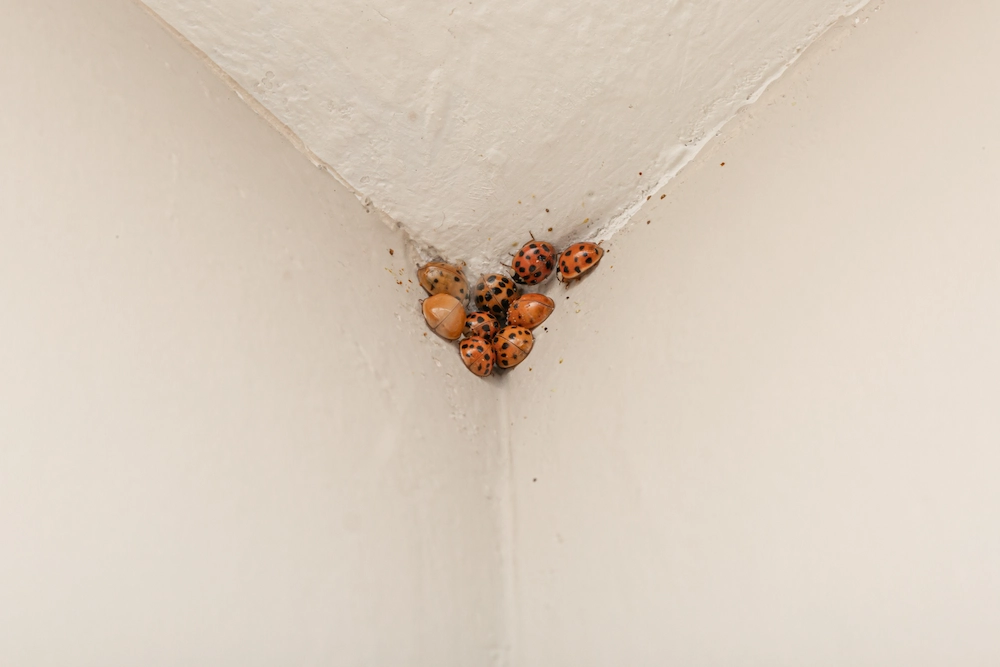
Multicolored Asian lady beetles look like the familiar ladybug but range from pale orange to deep red, and they favor light-colored, sunlit walls when they gather in fall. When disturbed, they release a yellowish fluid with a sharp smell that can stain. Cluster flies are a bit larger and slower than house flies, and they tend to show up buzzing lazily at upstairs windows on bright winter days.
One detail people miss: when a large number of insects die inside a wall over winter, those remains can attract carpet beetles and other scavengers later on. That is one more reason to deal with heavy fall clustering rather than waiting it out year after year.
Mice in the Walls Are a Different Kind of Problem
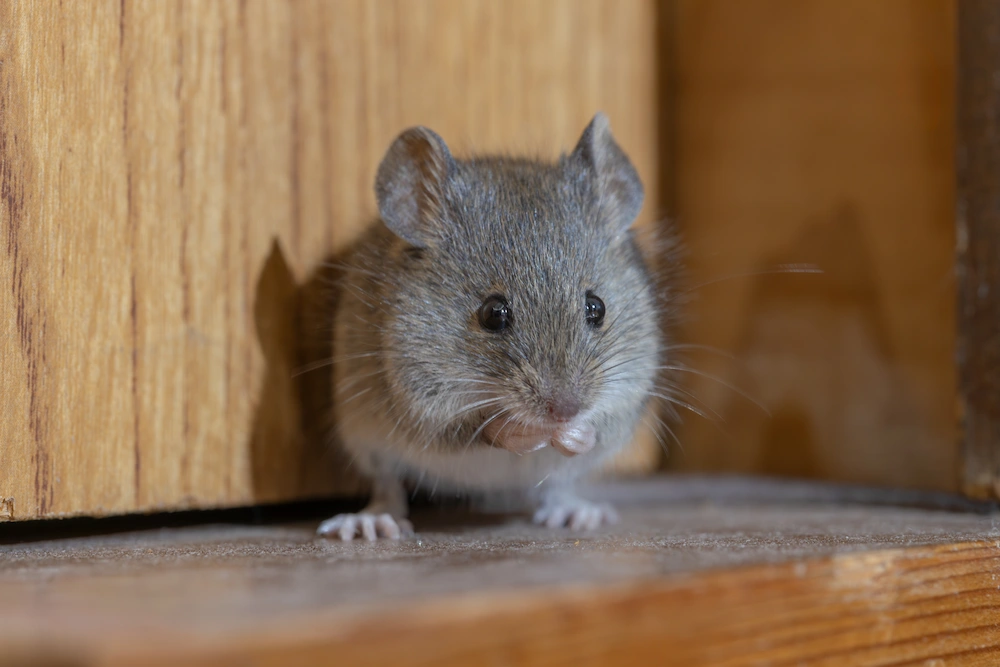
Insects in the walls are mostly asleep. Mice are not. House mice stay active all winter, build nests in wall cavities and insulation, travel between floors along pipes and wiring, and keep breeding as long as they have food and shelter.
An adult mouse can squeeze through a gap about the size of a dime, so one unsealed utility opening is usually enough. Norway rats tend to stay lower, getting into basements and lower walls from burrows near the foundation. Either way, rodent activity usually announces itself at night. Common signs include:
- Scratching, light scurrying, or gnawing sounds inside walls or ceilings after dark
- Small dark droppings along baseboards, under sinks, or at the back of cabinets
- Gnaw marks on food packaging, baseboards, or stored boxes
- Greasy smudges along their travel routes and a stale, musty odor in closed-off spaces
Gnawing is the part to take seriously. Rodents chew constantly to keep their teeth worn down, and wiring inside a wall is fair game, which can create a fire risk on top of the contamination from droppings and urine. If the sounds keep coming back night after night, professional rodent control that pairs trapping with finding and sealing entry points tends to hold up better than a few snap traps in the kitchen.
Getting Them Out Without Making Things Worse
With insects, the first instinct is usually a can of spray. Spraying into wall voids or setting off a fogger rarely reaches bugs tucked behind insulation, and it can leave even more dead insects inside the wall for scavengers to find. A vacuum works better for the ones that make it into the living space, as long as you empty the bag or canister outside right away.
Next, look at where they are coming out. Loose window trim, gaps around ceiling light fixtures, outlet and switch plates on exterior walls, and the openings around bathroom fans or range hood vents can all be sealed from the inside with caulk or foam gaskets. That keeps sleeping insects in the wall until spring, when most of them leave the way they came in.
The lasting fix happens outside, ideally in late summer before the fall rush. Sealing gaps around siding, utility lines, and window frames, repairing torn vent screens, and keeping branches trimmed back from the roofline can help reduce how many pests that overwinter in walls find a way into yours next year. Basements and garages deserve a close look too, because those are the spots where mice most often get their first foothold.
Quieter Walls Before Spring
Stink bugs, boxelder bugs, lady beetles, and cluster flies mostly treat your walls as a place to sleep, then wander out at the wrong moment. Mice are the exception, since they nest, breed, and chew while you are trying to sleep. Knowing which one you are dealing with makes the next step a lot clearer.
If you keep hearing scratching after dark or finding more bugs at the windows than usual, our team provides pest control in Alexandria and nearby communities like Arlington, Burke, and Falls Church, starting with an inspection of the places these pests are getting in. Fixing those gaps this winter also puts you a step ahead of next fall. For a free quote on our year-round pest control services, contact us today!
Citations
Enroth, C. (2017, January 31). Dealing with household overwintering insects: Stink bugs and flies, oh my! University of Illinois Urbana-Champaign. Available at https://extension.illinois.edu/blogs/good-growing/2017-01-31-dealing-household-overwintering-insects-stink-bugs-and-flies-oh-my (Accessed on October 14, 2026).
Pests That Overwinter in Walls and the Signs They Leave Behind
Pests That Overwinter in Walls and the Signs They Leave Behind Pests That Overwinter in Walls and the Signs They Leave Behind Summary: [...]
The Differences Between Web-Building and Hunting Spiders
The Differences Between Web-Building and Hunting Spiders The Differences Between Web-Building and Hunting Spiders Summary: Web-building spiders wait for prey to hit their [...]
Spotted Lanternflies Are the Worst Garden Pests
Spotted Lanternflies Are the Worst Garden Pests Spotted Lanternflies Are the Worst Garden Pests Summary: Spotted lanternflies drain sap from trees and vines, [...]
How Clogged Gutters Lead to Pest Problems
How Clogged Gutters Lead to Pest Problems How Clogged Gutters Lead to Pest Problems Summary: Clogged gutters trap standing water and decomposing debris [...]
Wasps Are Busy in Early Fall: Here’s Why
Wasps Are Busy in Early Fall: Here’s Why Wasps Are Busy in Early Fall: Here’s Why Summary: Wasp colonies peak in size during [...]
Pests That Work in Teams: Why Social Pests Are Harder to Ignore
Pests That Work in Teams: Why Social Pests Are Harder to Ignore Pests That Work in Teams: Why Social Pests Are Harder to Ignore [...]