
Wasps Are Busy in Early Fall: Here’s Why
Wasps Are Busy in Early Fall: Here’s Why
Summary: Wasp colonies peak in size during early fall, and workers with fewer larvae to feed shift their focus to sugary food, which makes them more visible and more likely to sting. This guide explains why wasps stay busy in early fall and how to reduce the risk around your yard.
If wasps seem to be everywhere around your yard right now, chasing soda cans, hovering near trash bins, or gathering in unusually large numbers near a nest, you are not imagining a change. Early fall is when wasp colonies reach their peak activity, and their behavior shifts in ways that make them both more visible and more aggressive across Alexandria, Chantilly, and Bethesda alike.
Here is why wasps are so busy in early fall, and what that means for how you should handle them around your Virginia home.
A Colony at Its Largest Point of the Year
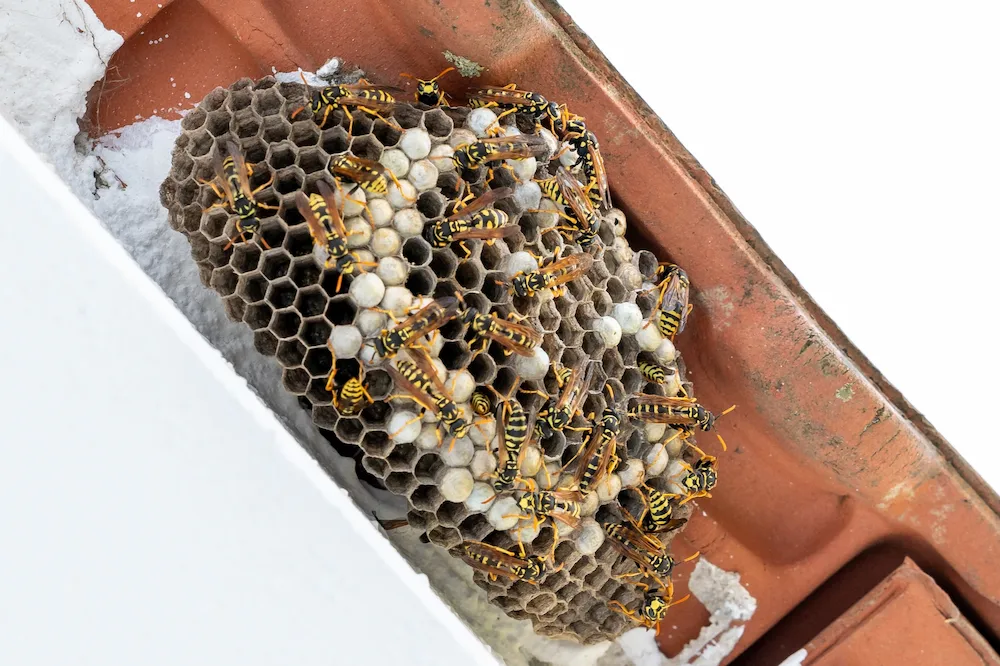
A wasp nest that started with a single queen in spring reaches its maximum size by late summer and early fall, sometimes holding thousands of workers depending on the species. That population peak means more wasps foraging at once, more traffic in and out of the nest, and a much larger group ready to respond if the nest feels threatened.
Paper wasps and yellowjackets are the two species Virginia homeowners run into most often this time of year, and they behave a little differently once fall arrives. Yellowjackets in particular are known for becoming noticeably more aggressive as the season winds down, since their colonies tend to grow larger than paper wasp colonies and their nests are often hidden underground or inside a wall void, which makes them easier to disturb by accident.
Throughout the spring and summer, worker wasps spend most of their energy hunting insects to feed developing larvae back at the nest. As the queen slows egg production heading into fall, there are fewer larvae to feed, which frees up workers that previously had a clear job. With less larval feeding to occupy them, workers shift toward foraging for sugar for themselves, which explains the sudden interest in sugary drinks, ripe fruit, and anything sweet left out at a cookout or picnic.
This shift also changes where wasps show up. A worker focused on hunting insects for larvae tends to stay closer to the nest and to garden areas with more insect activity, while a worker focused on sugar will travel further to reach a trash can, a fruit tree, or an outdoor gathering, which is part of why wasp sightings seem to spread across a wider area of the yard by early fall. Homeowners often describe this as wasps suddenly showing up in parts of the yard that never had activity earlier in the summer, which is really just the same colony expanding its search for food.
Where Nests Concentrate and Why Stings Increase
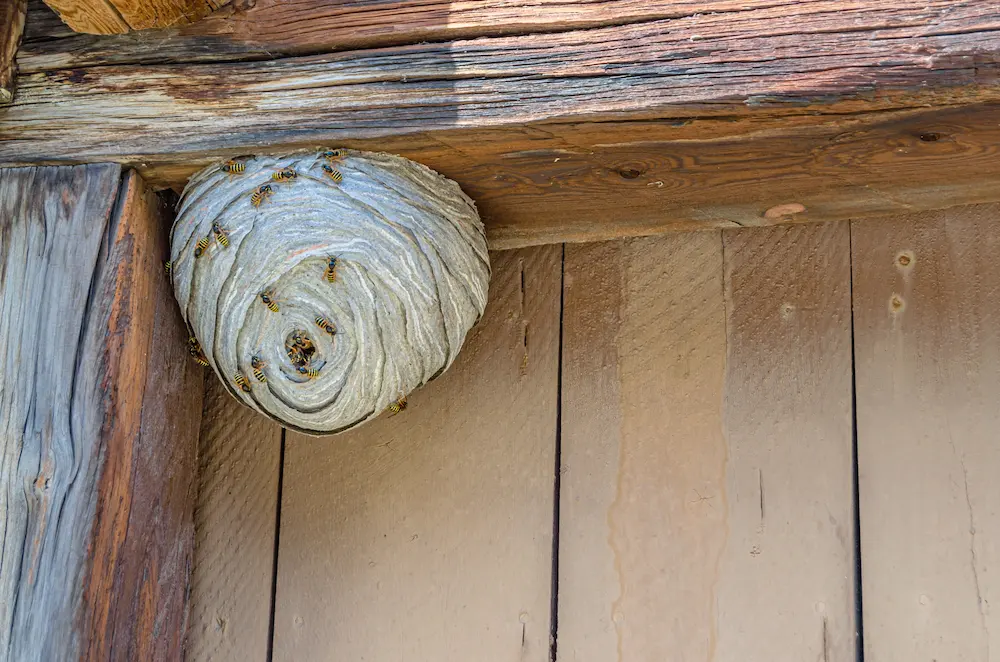
- Eaves, soffits, and porch ceilings.
- Inside unused grills, sheds, or outdoor storage boxes.
- Along dense fence lines and shrubs.
- In the ground near gardens, patios, or compost areas.
A larger colony combined with a shift toward more aggressive foraging naturally leads to more encounters between wasps and people. Wasps are also more likely to defend a food source once they find one, which is part of why an accidental disturbance near a nest or a picnic table in early fall tends to escalate faster than it would in spring.
Reducing the Risk Around Your Yard

Keeping food and drinks covered outdoors, checking grills and outdoor furniture before use, and walking the yard periodically to spot new nest activity all reduce the chances of a surprise encounter. Moving slowly and avoiding sudden swatting near any wasp, rather than trying to chase it away quickly, also lowers the odds of provoking a defensive response.
Underground yellowjacket nests deserve special attention when it comes to yard work this time of year. Mowing over a hidden entrance or stepping too close to one while gardening is one of the most common ways homeowners in Alexandria and the surrounding area end up with multiple stings at once, since the vibration and disturbance can trigger a defensive response from dozens of workers simultaneously.
If a nest has formed close to your Alexandria home, Green Pest’s wasp control services in Alexandria can remove it safely, which matters more this time of year given how large and defensive a fall colony can be.
It is also worth checking with anyone who has a known allergy to stings before doing yard work in an area with recent wasp activity, since a defensive response from a large fall colony carries more risk for that person than it would earlier in the season when nests were smaller and less active. Keeping an epinephrine auto-injector accessible during outdoor work in a yard with known nest activity is a reasonable precaution for households with an allergy history.
When the Activity Will Start to Slow Down
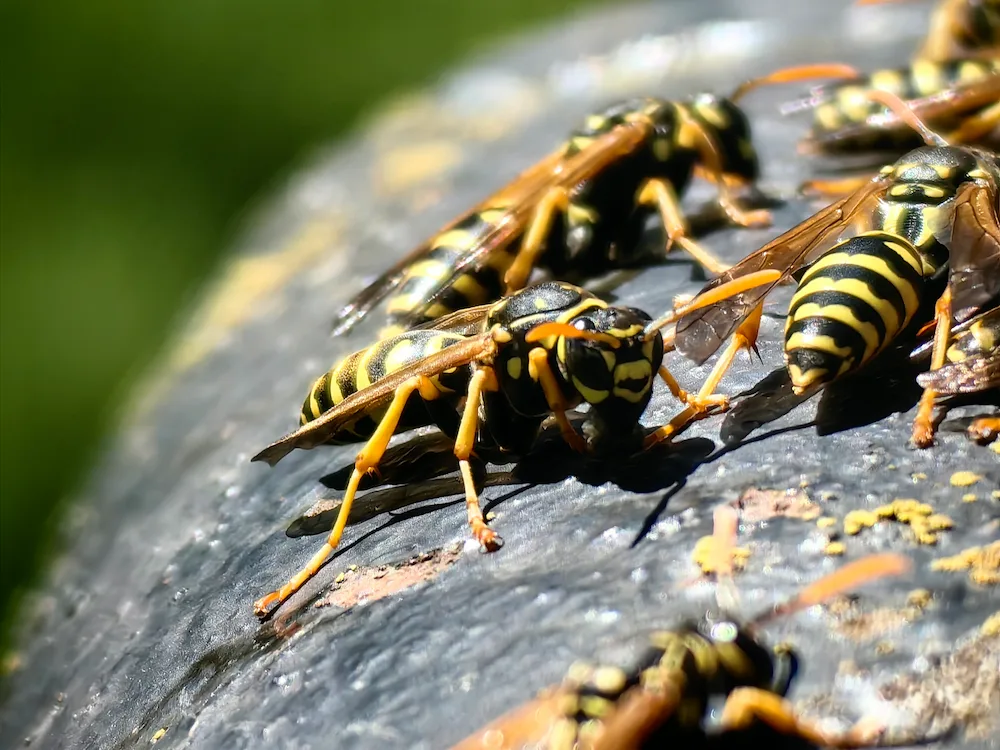
Wasp activity typically stays elevated through early fall before the first hard frost causes most of the colony to die off, leaving only newly mated queens to survive winter and start fresh nests the following spring. Until that frost arrives, treating every nest with caution remains the safest approach, particularly around properties with a lot of dense landscaping where a nest can grow undetected for weeks.
Newly mated queens spend the winter in a dormant state inside protected spots like woodpiles, siding gaps, or leaf litter, then emerge in spring to start a brand new colony from scratch. This is part of why removing an active nest in the fall does not guarantee a wasp free yard next year, since a queen from that same colony may already be tucked away somewhere nearby waiting for warmer weather.
Handle Wasps Before Someone Gets Stung
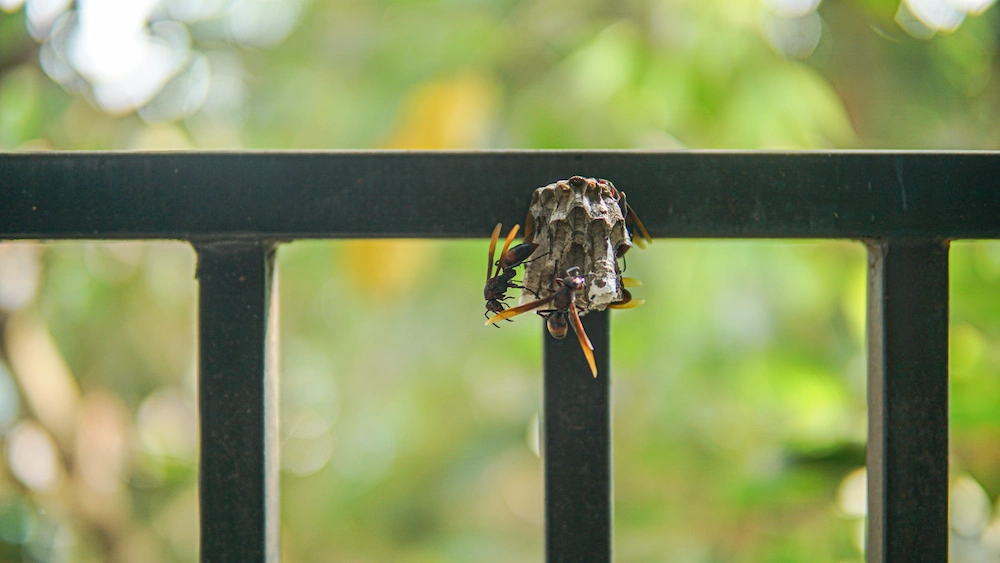
A wasp colony at its peak size is not something most homeowners want to handle with a single can of spray, especially once workers have shifted toward defending sugary food sources aggressively. The safest approach is usually professional removal rather than repeated DIY attempts, particularly for underground or wall void nests where the true size of the colony is impossible to judge from the outside.
A partial removal attempt can sometimes make a nest more dangerous rather than less, since surviving workers become more defensive after the colony has already been disturbed once. This is one of the more common ways a routine yard task turns into multiple stings, when a homeowner assumes a nest has been dealt with after one treatment attempt.
If wasp activity around your property feels like more than you want to manage on your own, Green Pest’s residential pest control services can handle it before someone gets stung, and can also check the rest of the property for additional nests that may not be as visible as the first one found. Contact us for a free quote on our efficient services!
Citations
Gruener, B. (2026, August 28). Why wasps love your garden this time of year – and how to keep them away. Southern Living. Available at https://www.southernliving.com/why-your-garden-is-suddenly-full-of-wasps-in-september-11799256 (Accessed on September 11, 2026).
Pests That Overwinter in Walls and the Signs They Leave Behind
Pests That Overwinter in Walls and the Signs They Leave Behind Pests That Overwinter in Walls and the Signs They Leave Behind Summary: [...]
The Differences Between Web-Building and Hunting Spiders
The Differences Between Web-Building and Hunting Spiders The Differences Between Web-Building and Hunting Spiders Summary: Web-building spiders wait for prey to hit their [...]
Spotted Lanternflies Are the Worst Garden Pests
Spotted Lanternflies Are the Worst Garden Pests Spotted Lanternflies Are the Worst Garden Pests Summary: Spotted lanternflies drain sap from trees and vines, [...]
How Clogged Gutters Lead to Pest Problems
How Clogged Gutters Lead to Pest Problems How Clogged Gutters Lead to Pest Problems Summary: Clogged gutters trap standing water and decomposing debris [...]
Wasps Are Busy in Early Fall: Here’s Why
Wasps Are Busy in Early Fall: Here’s Why Wasps Are Busy in Early Fall: Here’s Why Summary: Wasp colonies peak in size during [...]
Pests That Work in Teams: Why Social Pests Are Harder to Ignore
Pests That Work in Teams: Why Social Pests Are Harder to Ignore Pests That Work in Teams: Why Social Pests Are Harder to Ignore [...]