
Spotted Lanternflies Are the Worst Garden Pests
Spotted Lanternflies Are the Worst Garden Pests
Summary: Spotted lanternflies drain sap from trees and vines, produce sticky honeydew, and spread quickly through egg masses laid on nearly any surface. This guide explains why they are such a damaging garden pest and how Virginia homeowners can respond.
If you have noticed a striking gray moth-like insect with red underwings clustering on your trees this fall, you are looking at one of the most damaging invasive pests currently spreading through the Mid-Atlantic. Spotted lanternflies have moved into gardens around Alexandria, Chantilly, and Bethesda in growing numbers, and they do not treat plants the way most garden pests do.
Understanding why spotted lanternflies are such a serious garden pest, and what they actually do to plants, makes it much easier to justify taking action the moment you spot one.
How They Feed and Why It Spreads So Fast
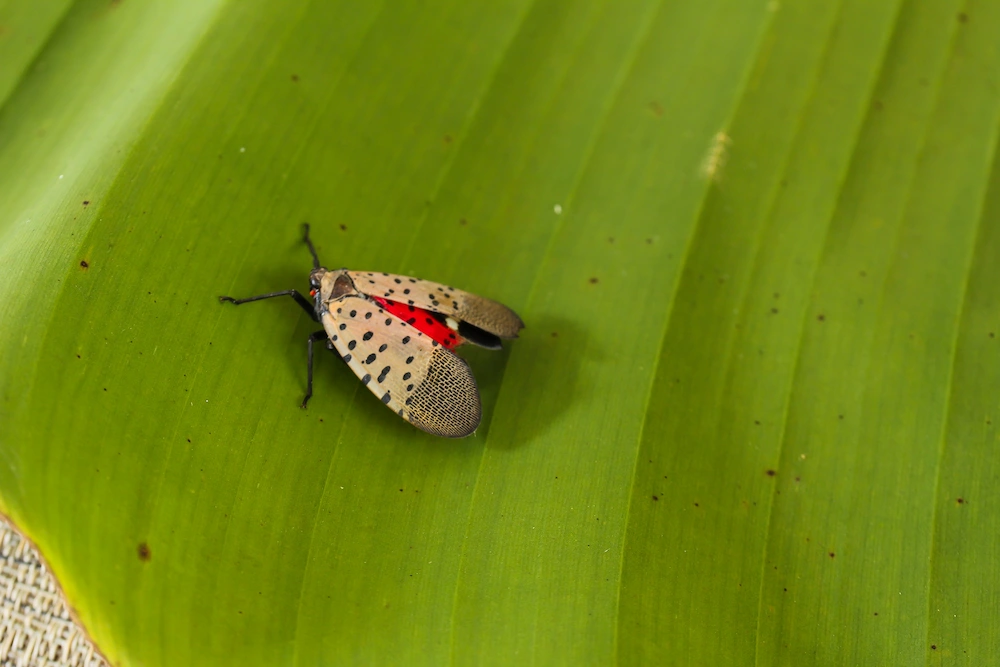
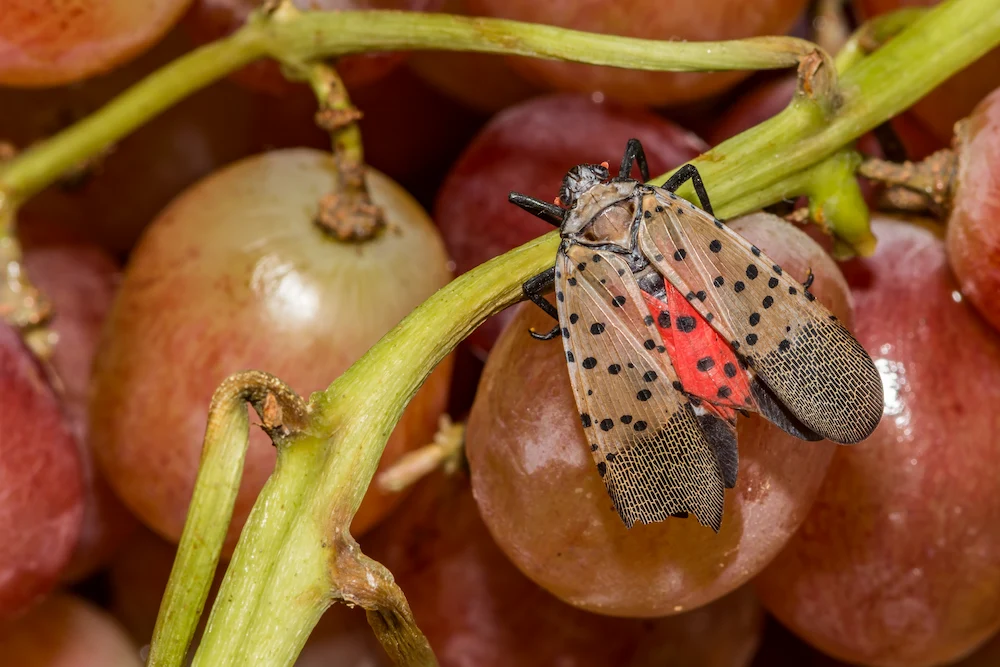
Spotted lanternflies use piercing mouthparts to tap directly into a plant’s vascular tissue and feed on the sap moving through it. Unlike chewing insects that damage leaves in a way that is easy to spot immediately, lanternflies drain plants slowly and often in large groups, which can weaken a tree or vine over weeks without obvious visible damage at first. Grapevines, maples, and fruit trees are particularly vulnerable, and a heavy infestation can reduce a plant’s overall vigor enough to affect fruit production or long term health.
As lanternflies feed, they excrete a sugary substance called honeydew that coats leaves, branches, and anything sitting beneath an infested tree. That honeydew attracts wasps and ants, and it also promotes the growth of black sooty mold, which can coat leaves and further reduce a plant’s ability to photosynthesize properly. Spotted lanternflies also lay egg masses on nearly any flat surface, including tree bark, outdoor furniture, vehicles, and firewood, which is a major reason the species has spread as fast as it has since first being detected in the United States.
The Life Cycle Behind the Fall Surge
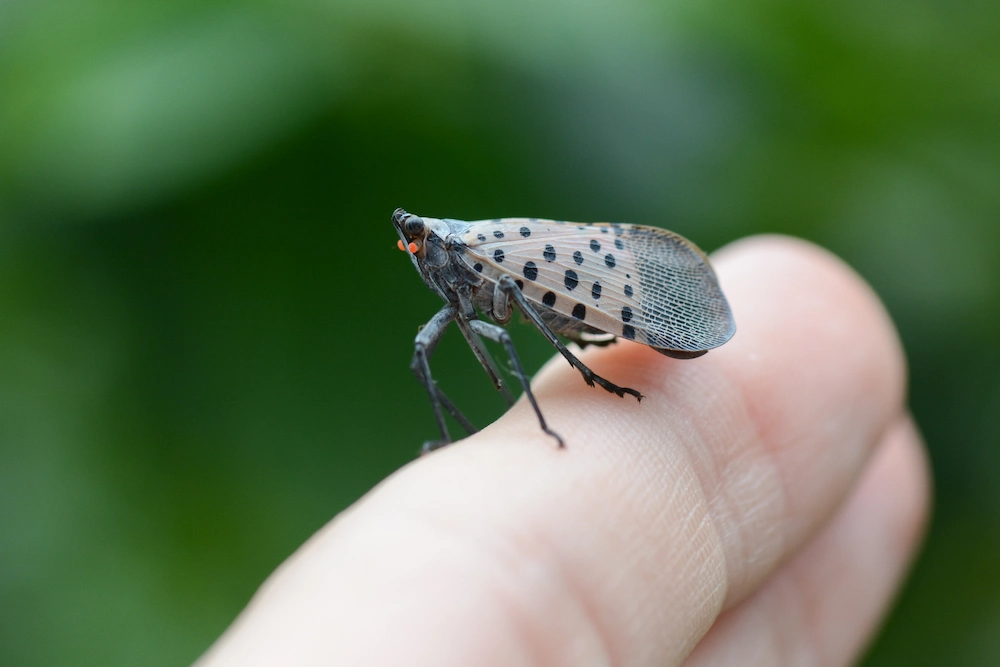
Spotted lanternflies hatch in spring as small black and white spotted nymphs, then progress through several stages before turning red and black ahead of reaching adulthood by mid to late summer. Adults are the stage most homeowners notice in the fall, since they are larger, more mobile, and actively feeding heavily before laying eggs for the next generation, which is exactly why late summer and early fall infestations often look so much worse than earlier in the year.
This same fall window is when adults concentrate most heavily on preferred host trees before egg laying begins, which makes September and October the most effective time to act on an active population rather than waiting until eggs have already been laid for the following spring.
Spotting an Infestation Early
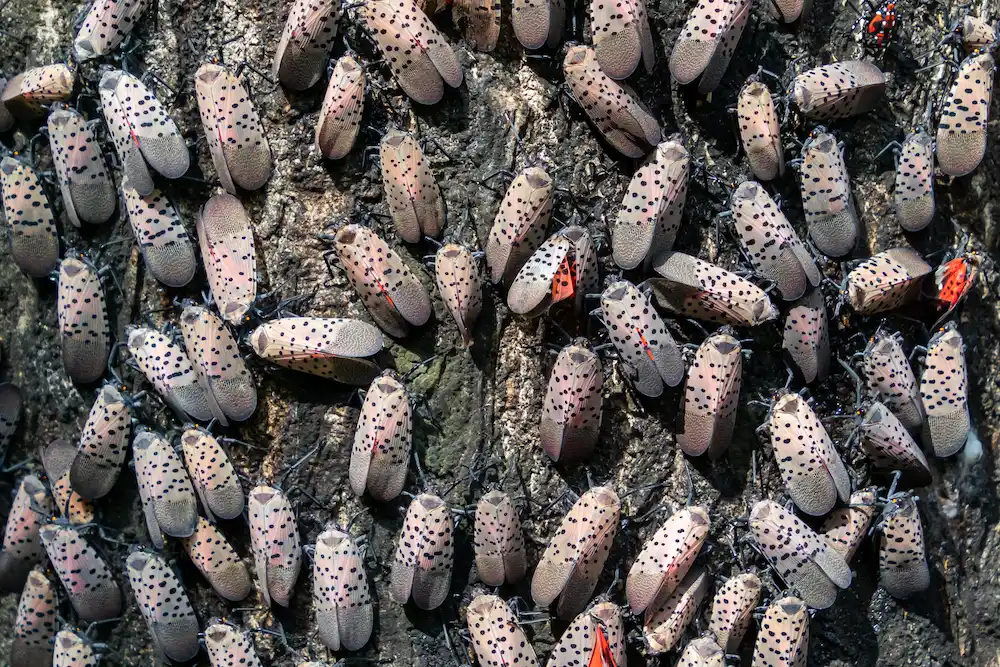
- Clusters of lanternflies on tree trunks, especially near the base.
- Sticky honeydew residue on leaves, patio furniture, or the ground.
- Black sooty mold developing on leaves and stems.
- Egg masses that look like gray, cracked mud smears on flat surfaces.
- Weakened or wilting growth on heavily fed upon plants.
Why Tree of Heaven Makes the Problem Worse
Spotted lanternflies have a strong preference for tree of heaven, an invasive tree species that has also spread widely across Northern Virginia. Removing tree of heaven from a property, where it is safe and practical to do so, removes one of the lanternfly’s favorite food and breeding sources and can meaningfully reduce local populations over time.
What Homeowners Can Do
Scraping and destroying egg masses between fall and early spring is one of the most effective ways to reduce next year’s population before it hatches. Checking outdoor furniture, firewood, and vehicles before moving them also helps prevent accidentally transporting egg masses to a new location, which is one of the main ways the species has spread between neighborhoods and counties.
A simple scraping tool, or even a plastic card and a bag of soapy water, is usually enough to remove an egg mass without needing any kind of chemical treatment. Dropping scraped egg masses into rubbing alcohol or hand sanitizer kills them reliably, which matters since eggs left on the ground can sometimes still survive and hatch the following spring.
For active infestations on trees or in gardens, professional treatment can help manage a population that has already established itself, particularly on high value trees or plants that a homeowner cannot easily reach on their own with scraping alone.
Banding tree trunks with sticky tape during the nymph stage in spring and early summer is another tool some homeowners use, though it works best as a supplement to egg mass removal rather than a replacement for it, since it only catches nymphs climbing a specific trunk rather than addressing the broader population nearby.
Why Reporting Sightings Matters
Because spotted lanternflies are still an active invasive species concern in Virginia, reporting new sightings to local agricultural extension offices helps track the spread and supports broader control efforts beyond an individual yard. Acting on an infestation early, both on your own property and by reporting it, gives the surrounding area a better chance of slowing the spread, whether that is a single yard in Chantilly or an entire block in Alexandria.
Neighborhoods with a lot of shared tree lines or fence rows tend to see lanternflies move from yard to yard quickly, so addressing an infestation on your own property also helps limit how far it spreads to homes nearby. Properties along a wooded buffer or greenway trail tend to see this the most, since lanternflies use that connected tree cover to move between yards far more easily than they would across open lawns.
Keeping an eye on any tree of heaven growing on neighboring or public land near your property is worth doing as well, since a population feeding on a tree just outside your yard can still send adults into your own garden throughout the fall regardless of how well maintained your own property is.
Protect Your Garden This Fall
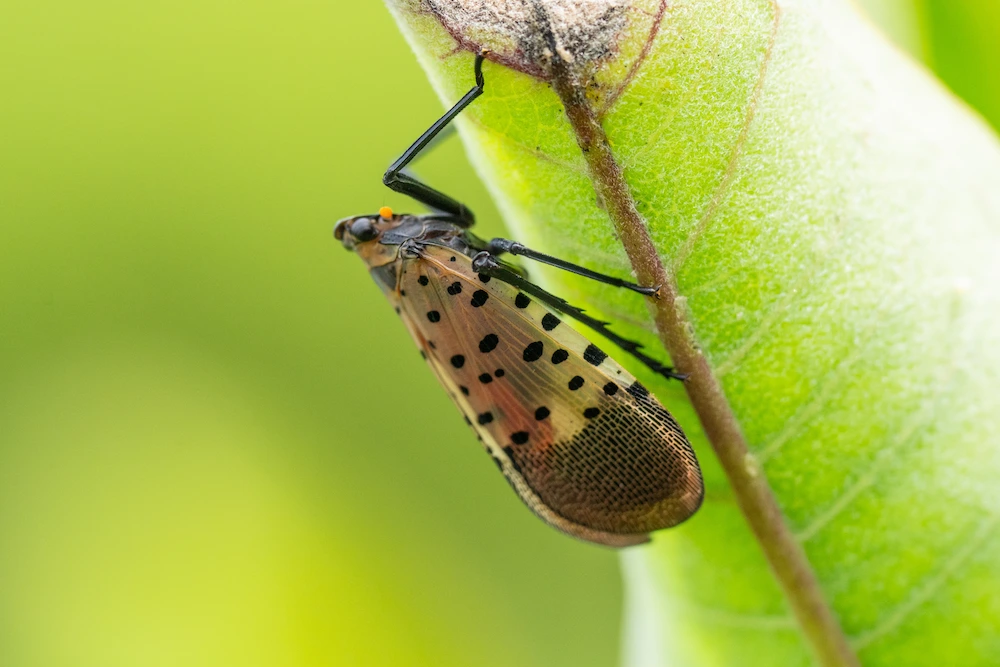
Spotted lanternflies are not going away on their own, and a garden or yard left unchecked can see the population grow significantly from one season to the next. Scraping egg masses, watching for early signs, and treating established infestations all matter more together than any single step alone.
If lanternflies have taken hold in your yard or garden, Green Pest’s Alexandria pest control team can help assess the extent of the infestation. For homes elsewhere in the region, our pest control services can put a treatment plan in place before next season’s population grows further.
Waiting until an infestation is severe rarely makes it easier to manage. A population that is caught and addressed while it is still limited to one or two trees is far more manageable than one that has already spread across a full yard or into a neighbor’s property as well. For a free quote on our efficient pest control services, contact us today!
Citations
Spotted lanternfly. (2025, August 26). USDA: Animal and Plant Health Inspection Service. Retrieved September 21, 2026, from https://www.aphis.usda.gov/plant-pests-diseases/slf
Pests That Overwinter in Walls and the Signs They Leave Behind
Pests That Overwinter in Walls and the Signs They Leave Behind Pests That Overwinter in Walls and the Signs They Leave Behind Summary: [...]
The Differences Between Web-Building and Hunting Spiders
The Differences Between Web-Building and Hunting Spiders The Differences Between Web-Building and Hunting Spiders Summary: Web-building spiders wait for prey to hit their [...]
Spotted Lanternflies Are the Worst Garden Pests
Spotted Lanternflies Are the Worst Garden Pests Spotted Lanternflies Are the Worst Garden Pests Summary: Spotted lanternflies drain sap from trees and vines, [...]
How Clogged Gutters Lead to Pest Problems
How Clogged Gutters Lead to Pest Problems How Clogged Gutters Lead to Pest Problems Summary: Clogged gutters trap standing water and decomposing debris [...]
Wasps Are Busy in Early Fall: Here’s Why
Wasps Are Busy in Early Fall: Here’s Why Wasps Are Busy in Early Fall: Here’s Why Summary: Wasp colonies peak in size during [...]
Pests That Work in Teams: Why Social Pests Are Harder to Ignore
Pests That Work in Teams: Why Social Pests Are Harder to Ignore Pests That Work in Teams: Why Social Pests Are Harder to Ignore [...]