
The Differences Between Web-Building and Hunting Spiders
The Differences Between Web-Building and Hunting Spiders
Summary: Web-building spiders wait for prey to hit their silk and often leave their egg sacs behind, while hunting spiders like wolf and jumping spiders chase their food and keep a closer watch on their young. This guide explains both web-building spiders and hunting spiders, the species Northern Virginia homeowners see most, and how each one affects spider control.
Fall in Northern Virginia brings two very different spider complaints. One homeowner finds big round webs stretched across the porch light and the shrubs by the front walk, while another nearly steps on a fast, hairy spider crossing the basement floor at night. Both are spiders, but they live very different lives, and that difference changes how you deal with them.
Below, we break down how web-building and hunting spiders get their food, how each group handles eggs and spiderlings, which ones you are likely to meet around homes in Chantilly, Fairfax, and Manassas, and what that means for keeping them out. Most of them are harmless to people, and knowing which group you have saves a lot of wasted effort.
How Each Group Gets Its Food
Web-Builders Let the Silk Do the Work
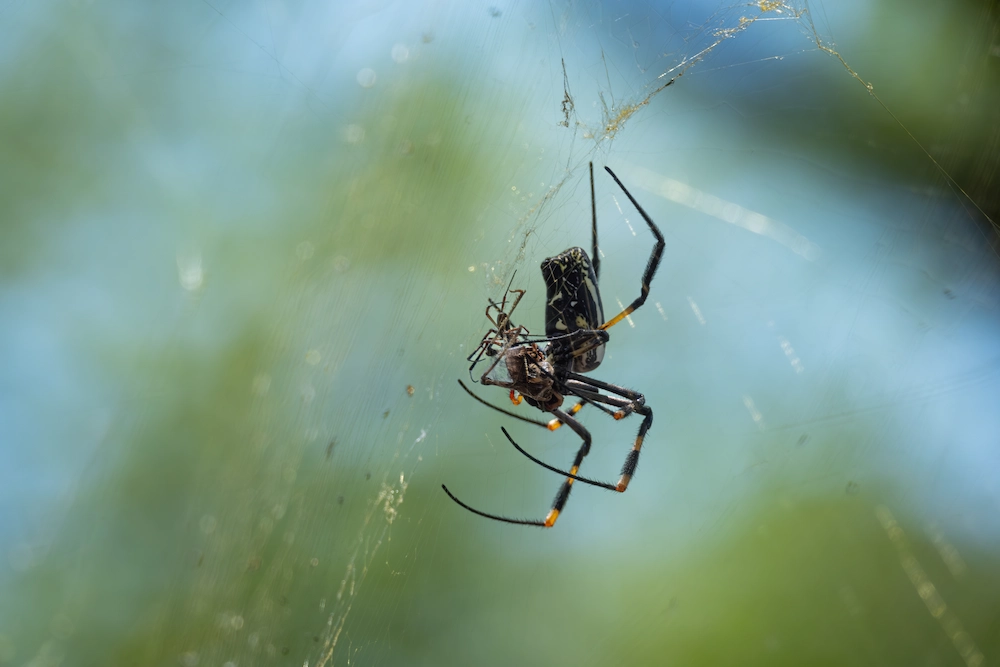
Web-building spiders stay put and wait. Most have fairly poor eyesight and rely on vibrations traveling through the silk instead, which lets them tell a struggling insect from a leaf that blew into the web. Once something is caught, they move in, bite, and often wrap the prey in silk to eat later.
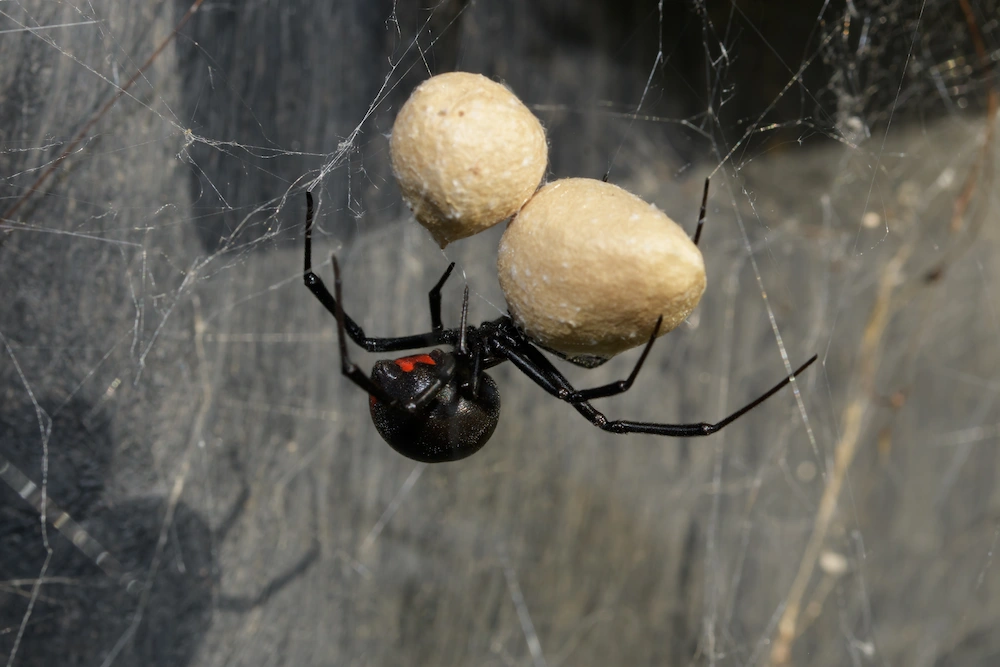
The web style says a lot about the spider. Orb weavers, including the yellow and black garden spider, build the classic round wheel web, and many of them take it down and eat the old silk to recycle its protein before spinning a fresh one. Cobweb spiders, like the common house spider and the black widow, make messy three-dimensional tangles and use a comb of bristles on their hind legs to fling sticky silk over whatever wanders in.
Funnel weavers, often called grass spiders, spin a flat sheet that narrows into a tube where the spider hides and waits to rush out. You will spot these sheets on lawns and low shrubs on dewy fall mornings. Cellar spiders, with tiny bodies and very long legs, hang loose webs in basement corners and will even prey on other spiders.
Hunters Go Out and Find It
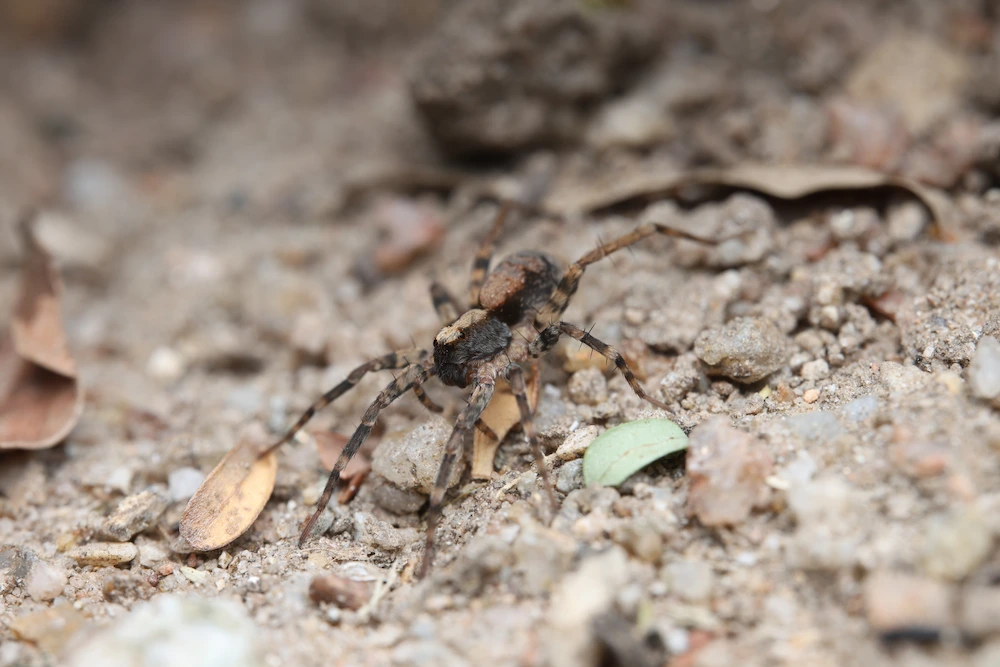
Hunting spiders still produce silk, but they do not rely on it to catch prey. Wolf spiders are the best known example: sturdy, brown or gray, and quick, they chase insects down on the ground, mostly at night. Their eyes reflect light, so a flashlight held near your own eye on a dark lawn will often pick up tiny green glints. Some of the bigger ones look alarming, but they would much rather run than bite.
Jumping spiders take a different approach. They have large forward-facing eyes with sharp vision, stalk prey in daylight, and pounce, trailing a silk safety line in case they miss the landing. The bold jumping spider, black with white spots, is one of the most common on Virginia decks and window frames. Yellow sac spiders hunt at night too and spend the day tucked into a small silk pouch, often right where a wall meets the ceiling.
Eggs, Egg Sacs, and Spiderlings
Every spider wraps its eggs in silk, but what happens next varies a lot. Many web builders fasten the egg sac somewhere protected and leave it. A garden spider, for example, makes a brown, papery sac in fall and attaches it to plants or a fence, and the young hatch inside and stay there through winter, long after the mother has died with the first hard frosts.
Common house spiders keep their eggs closer. A female hangs several tan, teardrop-shaped sacs inside her web over a season and stays nearby, which is why one neglected corner of a garage can produce a surprising number of small spiders. Cellar spiders go further and carry their loosely bound eggs in their jaws until they hatch.
Hunting spiders tend to be more hands-on. A female wolf spider attaches her round egg sac to the spinnerets at the tip of her abdomen and drags it everywhere, and once the eggs hatch, the spiderlings climb onto her back and ride along for a while. Jumping spiders usually guard their eggs inside a silk retreat, while nursery web spiders carry the sac in their jaws and spin a protective tent around it just before the young emerge.
Timing lines up with what homeowners notice outside. Orb weavers reach full size by late summer, which is why their webs seem to show up on every railing and shrub in September and October, with egg-laying right behind. Pulling down a web this time of year may also turn up a sac nearby, and removing it is a simple way to cut down on next spring’s crop.
That piggyback habit has a practical side. Swatting or stepping on a female wolf spider in late summer can scatter dozens of spiderlings across the floor, so a vacuum is the better tool.
Why the Difference Matters Inside Your Home
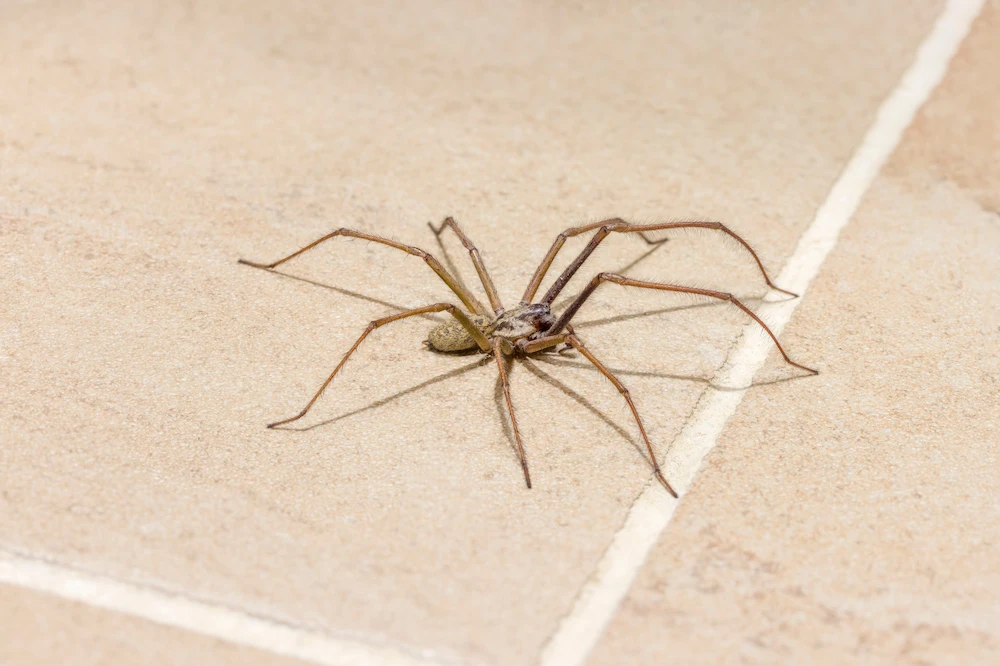
Web builders are usually easy to find, since the webs point right to them. Indoors, house spiders and cellar spiders can settle in for the long haul, living in basements, garages, closets, and window corners year-round as long as small insects keep wandering in. Regularly vacuuming webs and egg sacs, especially in rooms you rarely use, cuts down the next generation before it hatches.
Hunters are harder to pin down because they roam and leave no web behind. Wolf spiders found inside are usually wanderers that came in under a door or through a gap at ground level, which is why they show up most in basements, garages, and first-floor rooms in late summer and fall. Tighter door sweeps, sealed foundation cracks, and less clutter on the floor give them fewer ways in and fewer places to hide. Sticky traps along basement walls can also show you where they are entering.
Outdoors, both groups follow the food. Porch lights draw moths and other insects, and orb weavers happily build right beside them, while leaf piles, woodpiles, and thick mulch against the foundation give wolf spiders and their prey cover. Black widows like those same undisturbed spots, along with meter boxes and stacked flowerpots, so wear gloves when moving things around.
If spiders keep coming back despite cleanup, the real issue is often the insects they are eating. A quarterly residential pest control plan that treats inside and outside can help reduce web-building and hunting spiders along with the insect activity that keeps drawing them in.
Sorting Out the Spiders Around Your Home
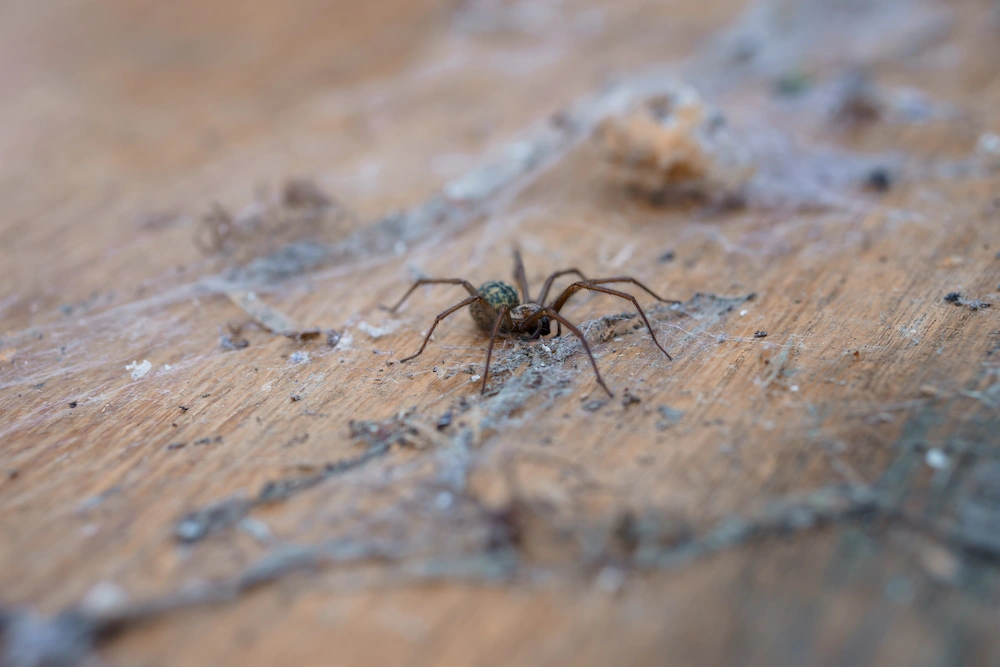
The split between web-building and hunting spiders comes down to strategy. Web builders wait for food to come to them and usually leave their eggs hanging in place, while hunters chase their meals and often keep their young close. Once you know which group keeps showing up, it gets much easier to decide whether you need a vacuum, a new door sweep, or a closer look at the bugs those spiders are feeding on.
When the webs keep returning or wolf spiders keep turning up in the basement, our technicians can find where they are getting in and close up those entry points. Families in Herndon, Reston, and nearby towns can read more about our spider control in Chantilly and book a visit before the colder months settle in. For a free quote on any of our effective pest control services, contact us today!
Citations
Hahn, J., Jesse, L., Lewis, D., & Liesch, P.J. (2019). Spiders. University of Minnesota Extension. Available at https://extension.umn.edu/garden-and-home/home-maintenance/household-insects/spiders (Accessed on October 8, 2026)
The Differences Between Web-Building and Hunting Spiders
The Differences Between Web-Building and Hunting Spiders The Differences Between Web-Building and Hunting Spiders Summary: Web-building spiders wait for prey to hit their [...]
Spotted Lanternflies Are the Worst Garden Pests
Spotted Lanternflies Are the Worst Garden Pests Spotted Lanternflies Are the Worst Garden Pests Summary: Spotted lanternflies drain sap from trees and vines, [...]
How Clogged Gutters Lead to Pest Problems
How Clogged Gutters Lead to Pest Problems How Clogged Gutters Lead to Pest Problems Summary: Clogged gutters trap standing water and decomposing debris [...]
Wasps Are Busy in Early Fall: Here’s Why
Wasps Are Busy in Early Fall: Here’s Why Wasps Are Busy in Early Fall: Here’s Why Summary: Wasp colonies peak in size during [...]
Pests That Work in Teams: Why Social Pests Are Harder to Ignore
Pests That Work in Teams: Why Social Pests Are Harder to Ignore Pests That Work in Teams: Why Social Pests Are Harder to Ignore [...]
How to Prevent Flies Inside and Out: Make Your Home Less Attractive
How to Prevent Flies Inside and Out: Make Your Home Less Attractive How to Prevent Flies Inside and Out: Make Your Home Less Attractive [...]