
Do Rodents Hibernate? How They Spend the Cold Months
Do Rodents Hibernate? How They Spend the Cold Months
Summary: House mice and Norway and roof rats do not hibernate; they stay active, keep eating, and keep breeding all winter, often inside homes. This guide answers whether rodents hibernate, explains how groundhogs, chipmunks, squirrels, and voles spend the cold months, and covers signs and prevention for Northern Virginia homes.
A lot of people assume rodent season ends when the first hard frost hits. The lawn goes quiet, the groundhog under the shed disappears until spring, and it seems reasonable to think mice and rats are curled up asleep somewhere too. Then the scratching starts in the ceiling around midnight in December.
So, do rodents hibernate? A few do, but the ones that cause trouble inside homes do not. This article explains which rodents sleep through winter and which stay awake, what mice and rats actually do between November and March, and how to make your house a poor place for them to spend the season.
The Rodents in Your House Stay Awake All Winter
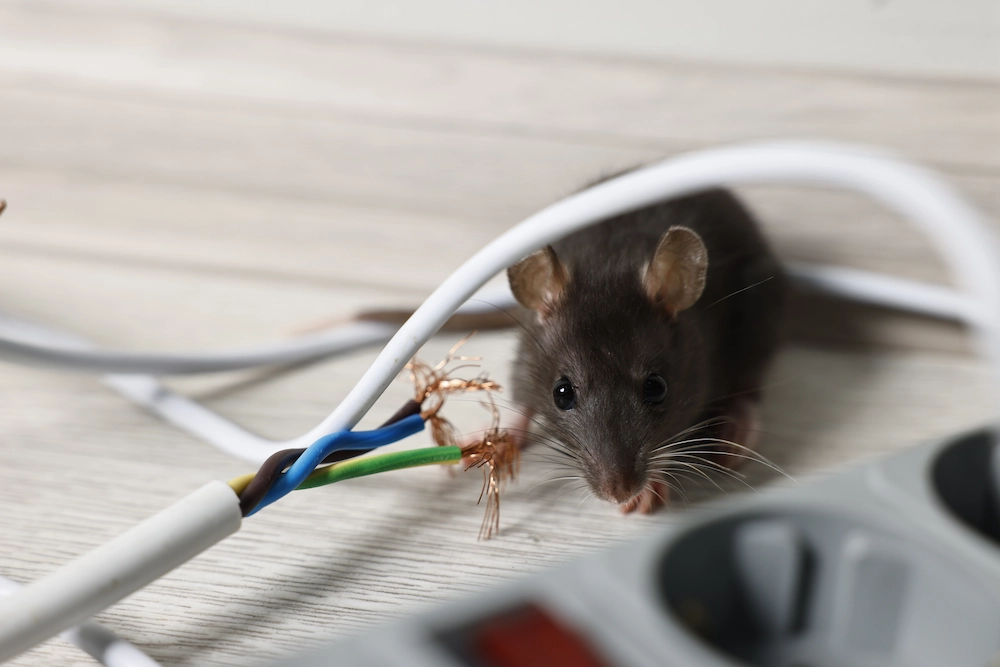
House Mice
House mice do not hibernate, and they do not slow down much in cold weather as long as they have a warm place to live. A heated home gives them steady temperatures, water, and a kitchen full of crumbs, so a mouse living in your walls in January behaves the same way it would in July. They are mostly active at night, which is why the sounds tend to start after the house goes quiet.
They also keep breeding. A female house mouse can start reproducing at about two months old and have several litters a year, so a pair that slips in during October can turn into a much bigger problem by February. Inside a home, mice can live up to a year or more.
Norway Rats and Roof Rats
Rats do not hibernate either. Norway rats are heavy-bodied, gray or brown, and tend to burrow, so they usually show up low in a home, in basements, crawl spaces, and around foundations. Roof rats are slimmer, with large ears, pointed noses, and tails as long as their bodies, and they are good climbers that may move into attics and upper walls.
Both species stay active all winter. Outdoors, rats keep foraging from burrows under sheds, decks, and woodpiles, and they will move closer to a house if trash bins, bird feeders, or pet food give them an easy meal.
Why Small Rodents Cannot Sleep It Off
True hibernation depends on storing a lot of fat or food and letting body temperature and heart rate drop for long stretches. Mice and rats are small, burn energy quickly, and need to eat often, so they rely on finding food and shelter instead of sleeping through the cold. That is a big reason they push indoors in the fall: a house solves the winter problem for them.
What About the Mice that Stay Outside?
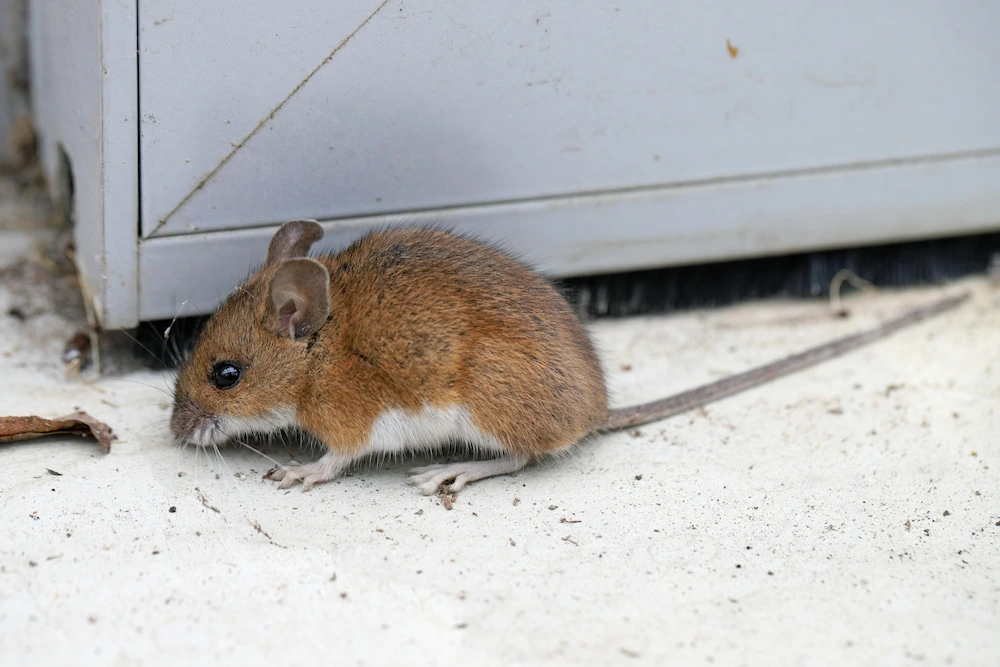
Not every mouse makes it into a building. Deer mice and white-footed mice, the big-eyed, white-bellied mice common in wooded yards and fields, spend the winter in burrows, under leaf litter, inside hollow logs, and in sheds, barns, and stacked lumber. They stay active, eat seeds they stored in the fall, and sometimes huddle together in a shared nest to stay warm.
Those outdoor mice are the ones that turn up in garages, cars, and storage sheds over the winter. Deer mice are more common in rural and wooded settings, while house mice are the usual culprit inside suburban homes, but either one will take advantage of an unsealed garage.
Rodents That Do Slow Down for Winter
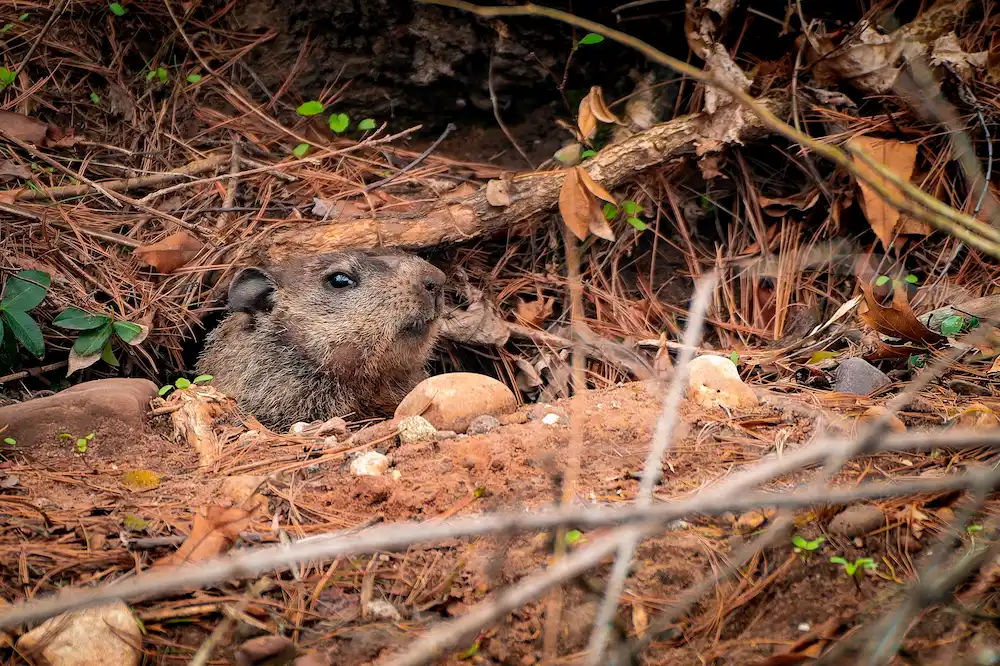
Groundhogs are the True Hibernators
If you have watched a groundhog waddle across a yard in Leesburg or Ashburn, you have seen one of the few rodents in the region that really hibernates. Groundhogs, also called woodchucks, fatten up through summer and fall, then retreat to an underground burrow where their body temperature and heart rate drop dramatically. They typically stay in that state for much of the winter and emerge in late winter or early spring.
That is why the groundhog living under a deck or shed seems to vanish around November. The burrow is still there, though, so it is worth noting where it is before spring.
Groundhogs rarely come indoors, but their burrows can run under sheds, porches, and patios. If you see a large hole with a mound of fresh dirt next to a foundation, keep an eye on it once the weather warms and the animal wakes up.
Chipmunks Take Long Naps with Snack Breaks
Eastern chipmunks spend most of the winter underground too, but they do not stay out cold the whole time. They drop into periods of deep sleep and then wake up every so often to eat from the stash of seeds and nuts they packed into their burrows during the fall. On a mild, sunny winter day, you may even see one poke out for a short while.
Squirrels and Voles Stay Busy
Gray squirrels do not hibernate. They stay active through winter, living in leaf nests high in trees or in tree cavities, and they dig up nuts they buried in the fall. One clue that separates them from mice is timing: squirrels are mostly active during the day, while mice and rats move around at night.
Voles, the small, stocky rodents that tunnel through lawns and garden beds, also stay active all winter. Under a layer of snow they keep feeding, and the winding runways they leave in the grass often show up once the snow melts in early spring.
A Mouse’s Winter Inside a Home
Where They Settle In
Once inside, mice look for warm, quiet spaces close to food. Wall voids, attics, crawl spaces, basements, garages, and the space under or behind appliances are all common nesting spots. They shred insulation, paper, cardboard, and fabric into soft nests, often near a heat source like a water heater, furnace, or the back of a refrigerator.
From there, they travel along walls and pipes to reach the kitchen and pantry. Mice tend to stick close to their food and eat small amounts many times a day, so one nest near the kitchen can mean steady traffic every night.
Why Winter Can Feel Worse Than Summer
Many homeowners notice more mouse activity in December and January than at any other time of year. Part of that is simple timing: the mice that moved in during the fall have had a couple of months to settle in and start raising young. A cold snap or a few days of snow can also push more rodents from sheds, woodpiles, and garages into the main house.
Winter also changes how we use our homes. Holiday baking, boxes of decorations pulled from the attic, and firewood brought in by the armload all give mice more food, more nesting material, and more chances to hitch a ride inside.
Signs They are Spending the Winter With You
Because mice stay out of sight, most people notice what they leave behind before they see one. Common signs include:
- Scratching, scurrying, or gnawing sounds in walls or ceilings at night
- Small dark droppings in cabinets, along baseboards, or near food
- Chewed food packaging, cardboard boxes, or plastic totes in storage areas
- Greasy smudges along walls and a stale, musty smell in closed-off spaces
Gnawing deserves real attention. Rodents chew constantly to keep their teeth worn down, and wiring, insulation, and drywall inside a wall are all fair game. Chewed wires can create a fire risk, and droppings and urine contaminate whatever surfaces mice cross.
Making Your Home a Poor Place to Spend the Winter

Close the Doors They are Using
Mice can squeeze through a gap about the size of a dime, so the small openings matter. Walk the outside of the house and look around utility lines, dryer vents, AC lines, garage door seals, and the gaps where siding meets the foundation. Stuffing small gaps with steel wool or copper mesh and sealing over them, or covering larger openings with hardware cloth, holds up much better than foam alone, which rodents can chew through.
Inside, look under sinks and behind the stove and washer where pipes come through the wall. Those openings often connect straight into the wall voids where mice are nesting.
Take Away the Food and Cover
Store pantry food, pet food, and birdseed in sealed hard containers, and keep trash bins closed with tight lids. Firewood and clutter piled against the house give rats and mice cover close to your foundation, so store firewood off the ground and away from the walls. Trimming branches that touch the roof also cuts off a route to the attic.
Be Careful With Cleanup
If you find droppings, do not sweep or vacuum them dry, since that can stir up dust from rodent waste. Public health guidance generally recommends wearing gloves, airing out the area, wetting droppings with a disinfectant first, and then wiping them up with paper towels. If anyone in the home feels sick after contact with rodents or their droppings, call a doctor.
Snap traps along the walls may catch a mouse or two, but they rarely fix a winter infestation on their own if the entry points stay open. Store-bought poisons can also be risky around kids and pets.
Winter Rodent Control in Ashburn and Nearby Towns

Put plainly, groundhogs hibernate and chipmunks nap through much of the season, but house mice and rats stay awake, keep eating, and keep breeding all winter. A warm house is exactly what they are looking for, which is why rodent activity around here tends to climb in fall and winter instead of fading out.
If you are hearing noises in the walls or finding droppings in the pantry, our rodent control services start with an inspection of your home’s exterior for entry points, which our technicians seal off, and the traps and baits we use are kept in contained stations. Homeowners in Leesburg, Herndon, and Reston can read more about our rodent control in Ashburn and schedule a visit before the coldest weeks of the year.
Contact us for a free quote on our reliable rodent control services today!
Citations
Calder, B. (2019, January 29). Do rats hibernate? – What rats do in the winter. Automatic Trap Company. Available at https://www.automatictrap.com/blogs/rats-trapping-tips/do-rats-hibernate?srsltid=AYCX9vIU_OXQrmXiWXFi9lr9FJkvHNiU1adogQE6QzXrF9R6iWiSqiNd (Accessed on November 9, 2026).
Do Rodents Hibernate? How They Spend the Cold Months
Do Rodents Hibernate? How They Spend the Cold Months Do Rodents Hibernate? How They Spend the Cold Months Summary: House mice and Norway [...]
5 Pest That Love High Entry Points
5 Pests That Love High Entry Points 5 Pests That Love High Entry Points Summary: Pest entry points must be addressed for effective [...]
Pests That Overwinter in Walls and the Signs They Leave Behind
Pests That Overwinter in Walls and the Signs They Leave Behind Pests That Overwinter in Walls and the Signs They Leave Behind Summary: [...]
The Differences Between Web-Building and Hunting Spiders
The Differences Between Web-Building and Hunting Spiders The Differences Between Web-Building and Hunting Spiders Summary: Web-building spiders wait for prey to hit their [...]
Spotted Lanternflies Are the Worst Garden Pests
Spotted Lanternflies Are the Worst Garden Pests Spotted Lanternflies Are the Worst Garden Pests Summary: Spotted lanternflies drain sap from trees and vines, [...]
How Clogged Gutters Lead to Pest Problems
How Clogged Gutters Lead to Pest Problems How Clogged Gutters Lead to Pest Problems Summary: Clogged gutters trap standing water and decomposing debris [...]