
How Do Ants Spend Winter? What Homeowners Should Know About Ants in Winter
How Do Ants Spend Winter? What Homeowners Should Know About Ants in Winter
Summary: Ant colonies don’t vanish in cold months. They slow down, move to protected spaces, and may still forage indoors where warmth and moisture are available. Winter is the best time to seal entry points and reduce moisture so spring activity stays outside.
Seeing a few scouts on the countertop in January can feel wrong. Ants are supposed to be a spring and summer problem, yet homeowners still notice trails in the cold months, especially after a warm spell or a big rain.
The truth is that ants don’t disappear when temperatures drop. They simply change their strategy. Understanding what happens to ants in winter helps you prevent surprise indoor activity now and avoid a bigger rush when spring arrives.
Ants Don’t Hibernate Like Bears, But They Do Slow Down
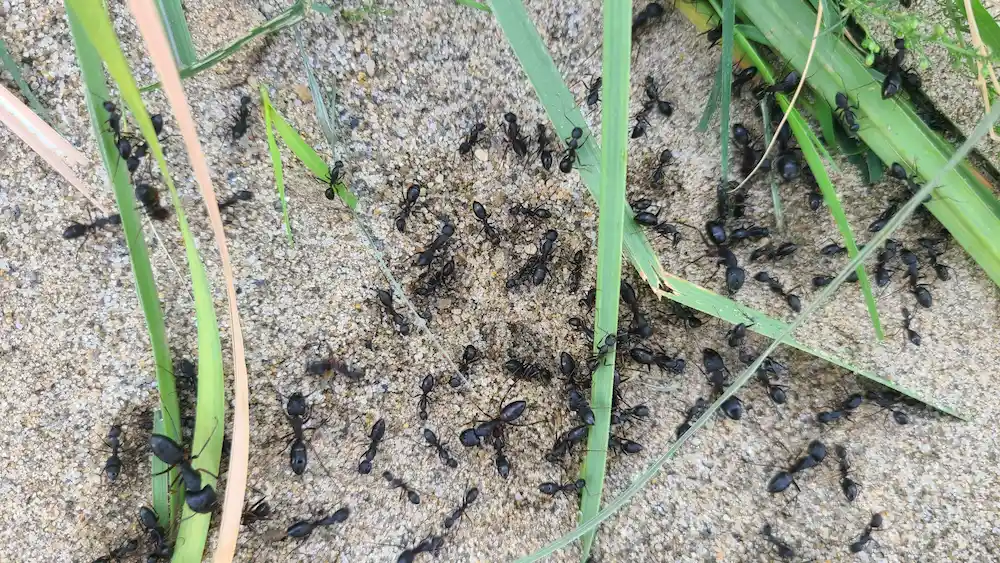
Most ants are cold-blooded, so their energy level tracks with temperature. When the ground cools, their metabolism drops and the colony becomes far less active. That’s why you might go weeks without seeing a single ant, even if a nest is nearby.
So, how ants survive winter depends on the species and where the colony is located. Some colonies move deeper into the soil where temperatures are more stable. Others tuck into protected spaces like under slabs, inside wall voids, or beneath mulch that insulates the ground.
Where Ants Go During Winter Outside
Outdoor colonies usually stay in place and shift their living space. In yards and landscaping, the nest may extend downward below the frost line or into a drier pocket of soil. The workers cluster together, and the colony relies on stored food and slow, low-effort movement.
If the nest is under a stone walkway, a concrete patio, or a driveway edge, those materials can provide extra protection. Sunlight warms hard surfaces during the day, and the heat lingers longer than it does in open soil. That small temperature bump can keep a colony functional even when nights are chilly.
What Happens Inside the Nest in Cold Weather
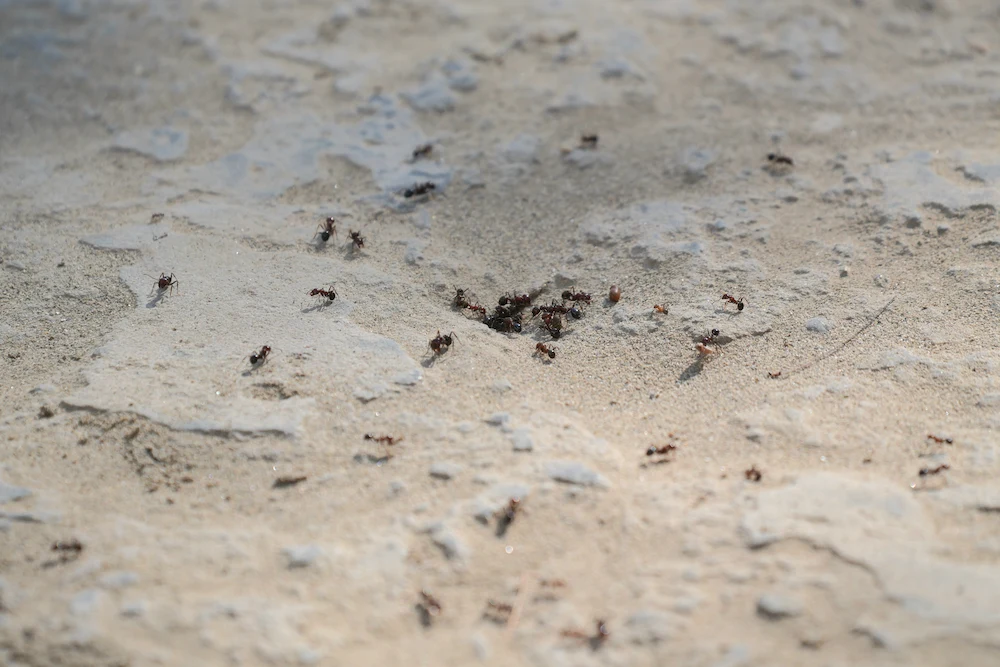
Think of ant colonies in cold weather like a household on a snow day. They conserve energy, reduce movement, and focus on survival tasks. Queens are protected, and the brood is kept in the most stable part of the nest.
Depending on the species, larvae may pause development until conditions improve. Adults can also switch to a tighter, more clustered posture that helps maintain warmth inside the colony. This is one reason you can have a nest nearby without obvious surface activity.
Food, Water, and the Winter Menu
Ants are opportunists, and winter changes what is available. Outside, sugary sources drop off once plants stop producing nectar and insects are less active. Inside, ants may be drawn to crumbs, pet food, and moisture in sinks, basements, and laundry rooms.
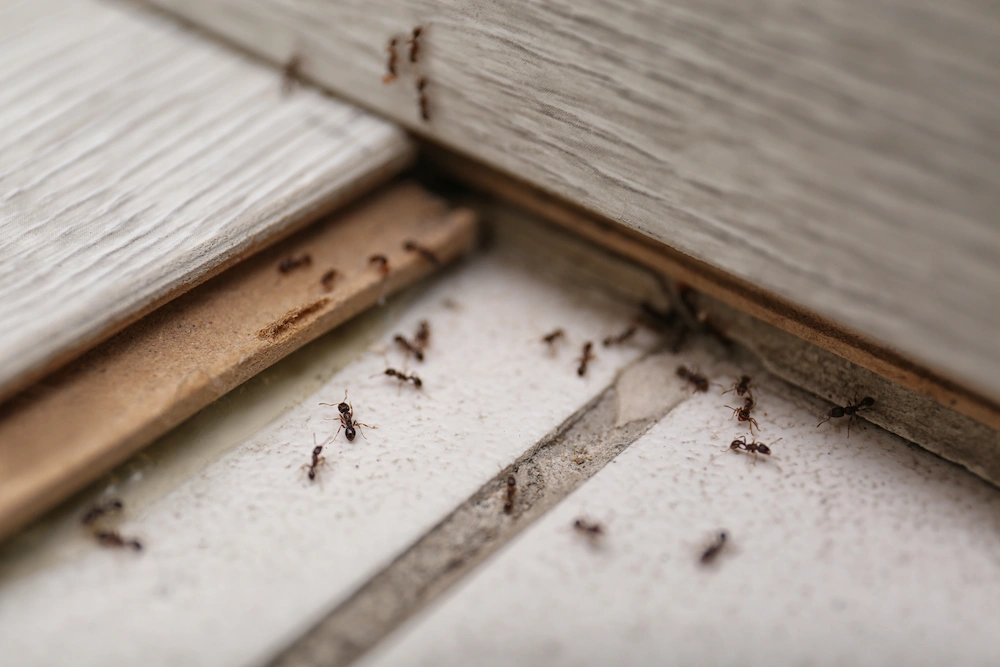
If you notice winter ant activity indoors, it often means one of two things. Either a colony is already established in a protected area of the structure, or a nearby outdoor nest found a warm path in and is using your home as a seasonal food stop.
Why You Can Still See Ants Indoors During Winter
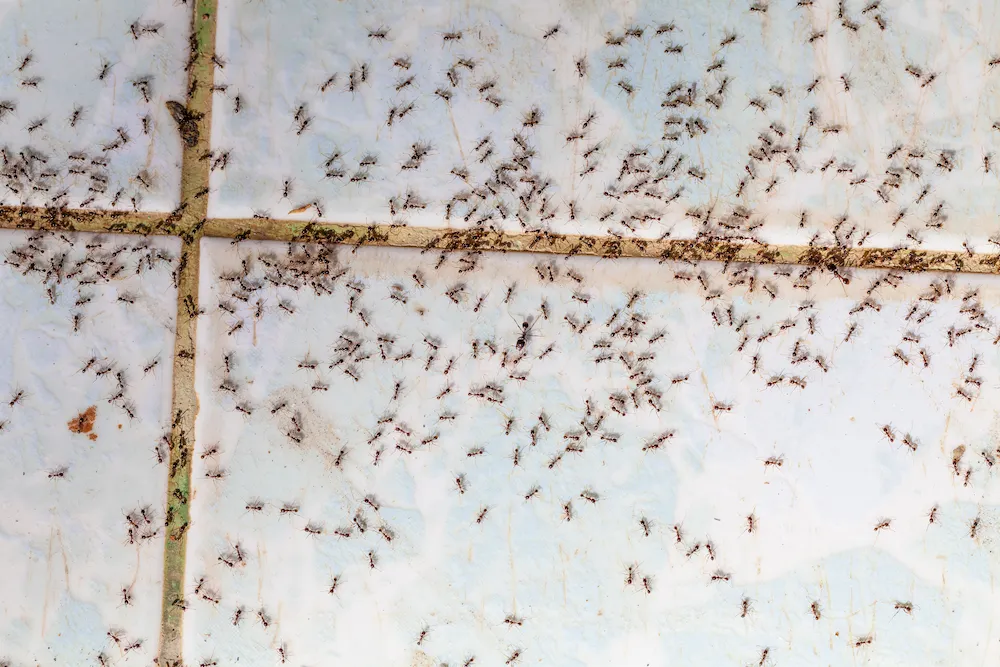
Homes create their own microclimate. Heated air, plumbing lines, and small gaps around foundations can make certain areas feel like spring even when it is freezing outside. Ants follow warmth and dependable resources, and they do not need much to keep going.
Common winter hotspots include kitchens, bathrooms, utility rooms, and finished basements. If there is a small leak, condensation, or damp wood, ants can linger and keep foraging. In some cases, carpenter ants and other moisture-loving species may treat that area as a long-term nest site.
A Quick Note on Sudden Winter Surges
If you see a sudden surge of ants after turning on the heat or after a warm week, that can happen when a nest is disturbed. Ants may relocate inside wall voids or under insulation, and temporary trails can form while they adjust.
The key is not to assume the problem will disappear on its own. A winter sighting is valuable information because it tells you where ants are active when the colony is trying to conserve energy. That makes it a good time to pinpoint entry points and food sources.
How Ants Prepare for Spring and Why Prevention Now Matters
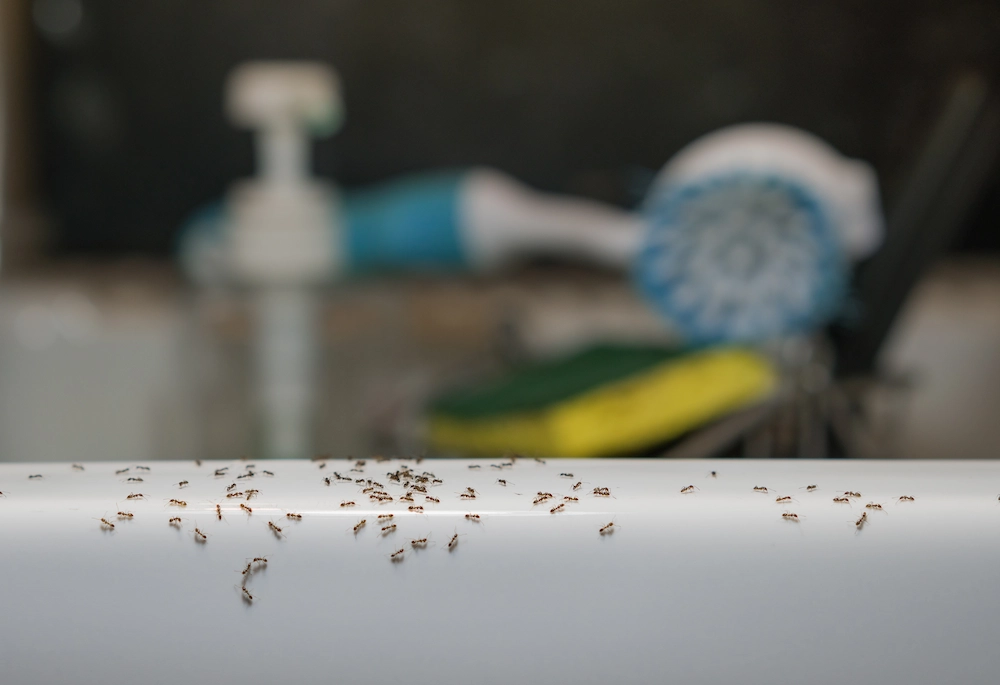
Late winter and early spring are transition months. Ants preparing for spring begin to ramp up activity as temperatures rise and food becomes easier to find. Colonies may expand their tunnels, start moving brood to warmer areas, and send out more scouts.
If a colony has been quietly active near your home all winter, spring can turn a minor nuisance into daily trails in a hurry. That is why prevention in the off-season is one of the smartest ways to reduce summer pressure.
Simple Ways to Make Your Home Less Appealing
You do not need to overhaul your house to make a big difference. Focus on warmth, moisture, and easy food access, since those are the winter basics that keep ants motivated.
- Seal gaps where pipes and wires enter the home, and replace worn weather stripping on doors.
- Store pantry foods and pet food in airtight containers and wipe down counters nightly.
- Fix dripping faucets and address damp spots around sinks, tubs, and water heaters.
Outdoor maintenance helps too. Pull mulch back a few inches from the foundation, keep leaf litter from piling against the house, and trim shrubs so branches do not touch siding. Those small changes remove bridges and reduce the protected spaces ants like to use.
When DIY Steps Aren’t Enough
Baits and sprays can reduce what you see, but they do not always solve the colony. Ant species vary widely, and the best treatment depends on whether the nest is outdoors, under a slab, or inside a wall void. Some colonies also split into satellite nests, which can make the problem feel like it moves around.
If you keep seeing trails, find ants in multiple rooms, or notice activity returning after cleaning and sealing, it may be time for a professional inspection. A targeted plan is usually more effective than rotating store-bought products, and it can help prevent re-infestation when spring hits.
If you want help getting ahead of seasonal ant pressure, explore local options for professional ant control in Bethesda and nearby areas and browse these general pest prevention tips for year-round protection.
Bottom Line: Winter is the Planning Season for Ants and Homeowners
Ants are built to survive, and winter is not a shutdown for the colony. It is a quieter phase where they conserve resources and use protected spaces to wait out the cold. That is why a few winter sightings should be taken seriously, not ignored.
Use the colder months to tighten up entry points, reduce moisture, and clean up food sources. When spring arrives, you will be glad you handled the basics early and made your home a harder target for hungry scouts. It may not seem like a big deal to see ants in winter, but solving the issue now will help you achieve an ant-free year!
Citations
Why do ant problems seem worse in the winter?. (2025, December 29). Pointe Pest Control. Retrieved January 8, 2026, from https://pointepest.com/why-ant-problems-are-worse-in-winter/
The Differences Between Web-Building and Hunting Spiders
The Differences Between Web-Building and Hunting Spiders The Differences Between Web-Building and Hunting Spiders Summary: Web-building spiders wait for prey to hit their [...]
Spotted Lanternflies Are the Worst Garden Pests
Spotted Lanternflies Are the Worst Garden Pests Spotted Lanternflies Are the Worst Garden Pests Summary: Spotted lanternflies drain sap from trees and vines, [...]
How Clogged Gutters Lead to Pest Problems
How Clogged Gutters Lead to Pest Problems How Clogged Gutters Lead to Pest Problems Summary: Clogged gutters trap standing water and decomposing debris [...]
Wasps Are Busy in Early Fall: Here’s Why
Wasps Are Busy in Early Fall: Here’s Why Wasps Are Busy in Early Fall: Here’s Why Summary: Wasp colonies peak in size during [...]
Pests That Work in Teams: Why Social Pests Are Harder to Ignore
Pests That Work in Teams: Why Social Pests Are Harder to Ignore Pests That Work in Teams: Why Social Pests Are Harder to Ignore [...]
How to Prevent Flies Inside and Out: Make Your Home Less Attractive
How to Prevent Flies Inside and Out: Make Your Home Less Attractive How to Prevent Flies Inside and Out: Make Your Home Less Attractive [...]