
Pests That Work in Teams: Why Social Pests Are Harder to Ignore
Pests That Work in Teams: Why Social Pests Are Harder to Ignore
Summary: Some household pests succeed because they cooperate. This guide explains how ants, social wasps, termites, and other group-dwelling pests use communication, division of labor, and shared resources to keep infestations going.
One ant on the counter or one wasp near the deck can look like an isolated visitor. With social pests, however, the individual you see may be part of a much larger group working toward the same goal.
Some of the most successful household pests survive through cooperation. Ants share food and follow chemical trails, while many stinging insects divide jobs among colony members. Understanding pests that work in teams helps explain why simply eliminating the insects you can see may leave the real problem untouched.
Why Some Pests Depend on the Colony
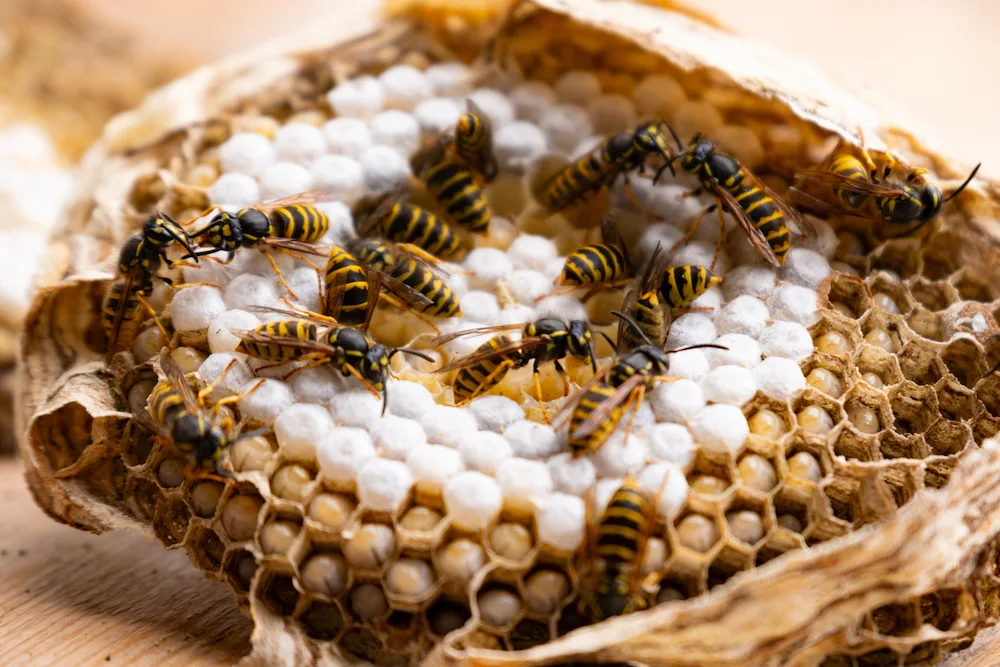
Social insects live in organized groups where different members perform different jobs. A colony may include reproductive individuals, workers that gather food, and members that protect the nest. This division of labor allows the group to accomplish far more than a lone insect could manage.
That organization also changes the way an infestation behaves around a home. Foraging workers may travel well away from the nest, which means the pest you spot in a kitchen, garden, or patio is not necessarily living in that exact location.
Communication Keeps the Group Moving
Ant colonies are especially good at coordinating food searches. Workers can use pheromone trails to guide nest-mates toward a useful food or water source. This is why a single scout ant can be followed by a steady line of workers once food has been discovered.
Social wasps also communicate within the colony and defend the nest as a group. When a nest is disturbed, defensive behavior can involve many workers rather than the one or two insects initially visible.
Ants Turn Foraging Into a Group Project
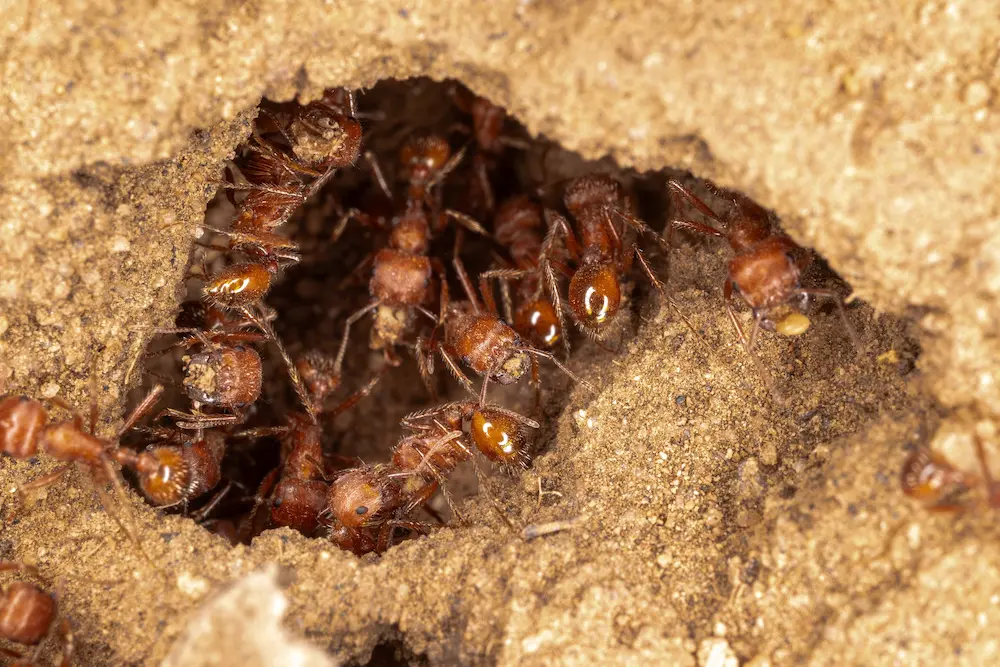
Ants are one of the clearest examples of teamwork in the pest world. Workers leave the nest to locate food and water, then help recruit other colony members to useful resources. Inside a home, that can turn a few crumbs or a sticky spill into a repeat destination.
The colony structure is also why wiping away visible ants may provide only temporary relief. If the nest and its reproductive members remain active, additional workers can continue foraging. At Green Pest Services, we assert that finding nesting areas is an important part of proper ant control.
Different Ants Bring Different Problems
Not every ant species behaves exactly the same way. Some are primarily nuisance invaders, while carpenter ants can excavate galleries in wood, particularly where moisture has created favorable conditions. Correct identification helps determine what the colony is doing and where it may be established.
For persistent trails or recurring indoor activity, Green Pest Services offers professional ant control to help identify the species, nesting area, and conditions supporting the colony.
Wasps and Yellow Jackets Defend Their Home Together
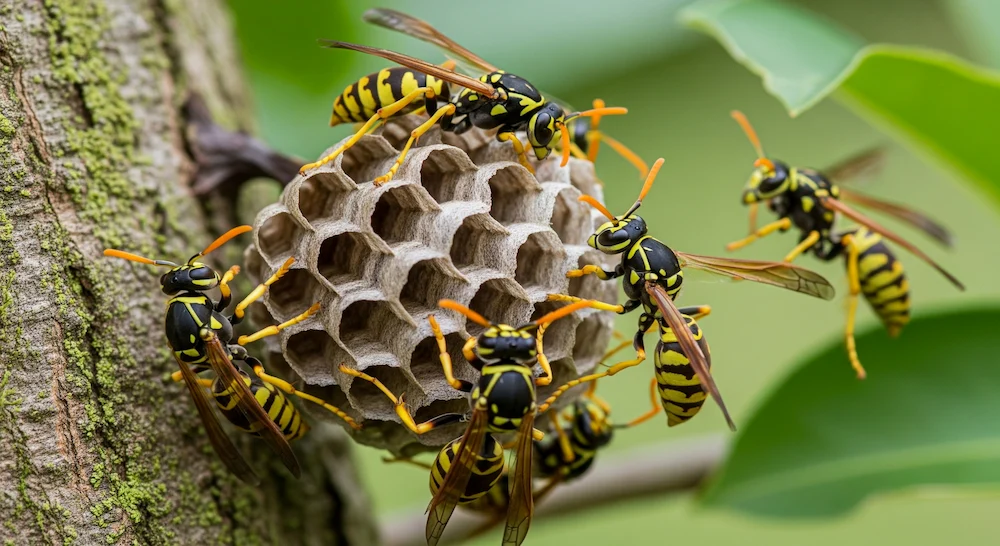
Many wasps and yellow jackets are social insects that live in colonies built around a queen and a workforce. Workers collect food, maintain the nest, and protect it from perceived threats. As the colony grows, activity around the nesting site can become increasingly noticeable.
This teamwork is particularly important when someone approaches or disturbs a nest. Defensive workers may respond together, which is why active nest removal should not be treated like a simple do-it-yourself chore.
One Wasp Can Point to a Busy Nest Nearby
Seeing an occasional wasp feeding on flowers does not automatically mean there is a nest on your property. Repeated traffic to the same eave, wall opening, shrub, ground cavity, or shed deserves more attention because workers commonly travel back and forth between the nest and food sources.
Avoid blocking an active nest entrance or striking the nest. If social wasps have established a colony near doors, patios, play areas, or other frequently used spaces, professional pest control is the safer approach.
Termites Build Their Success Around Cooperation
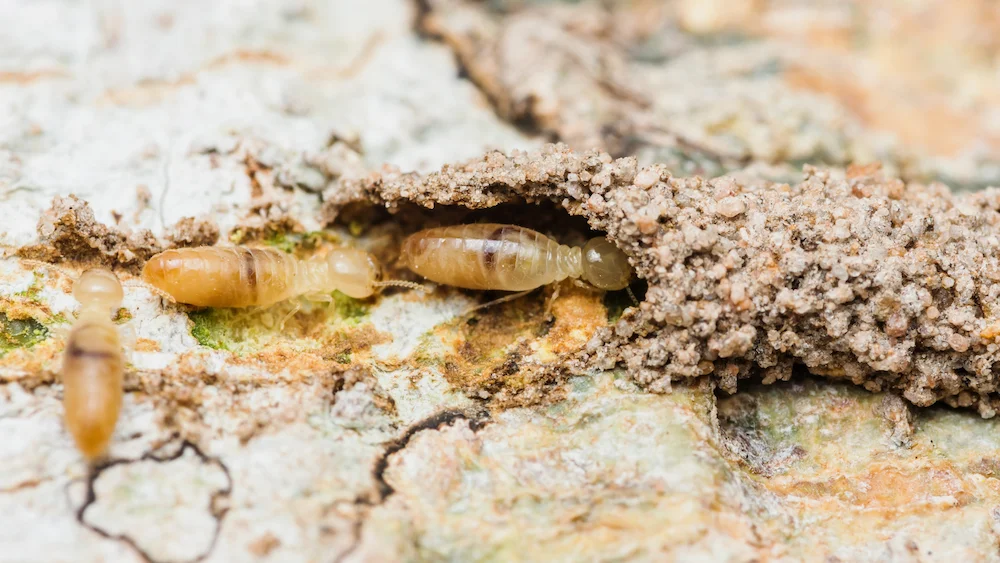
Termites are another highly organized example of pests that live in colonies. Colonies contain different castes that handle reproduction, feeding, maintenance, and defense. Workers can remain concealed while feeding within wood or traveling through protected routes, allowing activity to continue without obvious insects moving through a room.
Their cooperative lifestyle is one reason termite problems can remain hidden. The visible evidence may be a mud tube, discarded wings, or damaged wood rather than a large group of termites out in the open.
Hidden Activity Makes Inspection Important
Removing a few visible termites does not address a colony operating in soil or structural wood. Signs around foundations, crawl spaces, wooden supports, and other vulnerable areas should be evaluated rather than treated as isolated insects.
Because termite activity can involve parts of a structure that are difficult to inspect, professional identification and treatment are important when homeowners find suspicious damage or other warning signs.
Cockroaches Are Not Social Like Ants, but They Still Gather
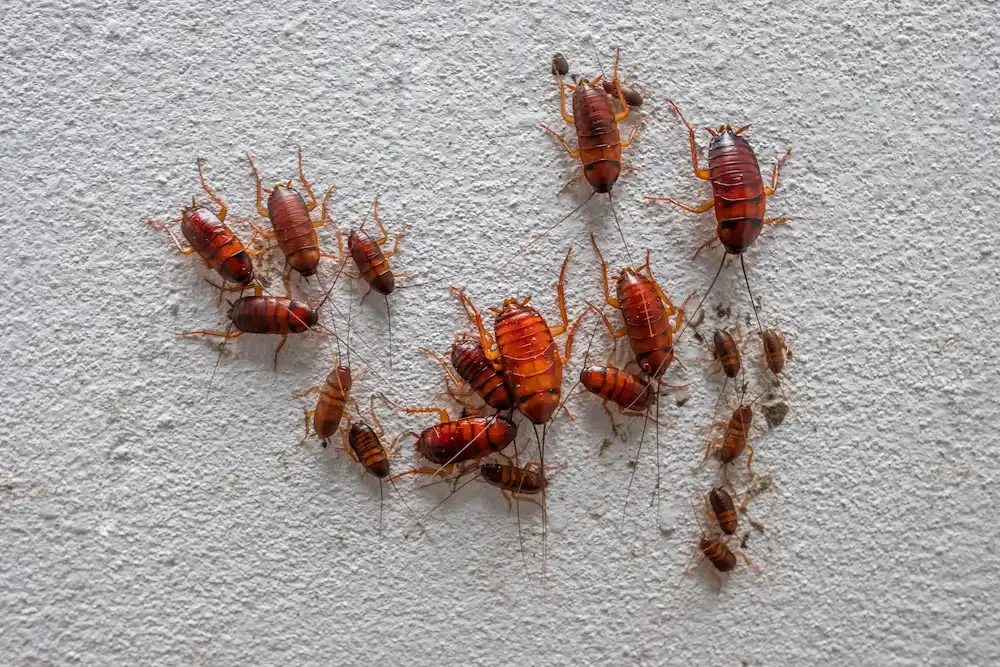
Cockroaches are worth mentioning because homeowners often see them clustered together. They do not have the same organized caste system as ants or termites, but favorable shelter, food, moisture, and chemical cues can cause many roaches to occupy the same protected areas.
That distinction matters. A group of cockroaches is not a coordinated colony in the same sense as an ant nest, yet multiple roaches hiding around cabinets, appliances, plumbing, or wall voids can still indicate that the environment is supporting a larger infestation.
The Conditions Supporting the Group Need Attention
Killing individual roaches without correcting food residue, leaks, clutter, or hiding spaces can allow activity to continue. The more resources a home provides, the easier it is for a population to remain established.
This is a useful reminder that pest control is not only about what the insect does socially. It is also about finding the conditions that allow many pests to live and reproduce in the same place.
Why Teamwork Makes Pest Problems More Complicated
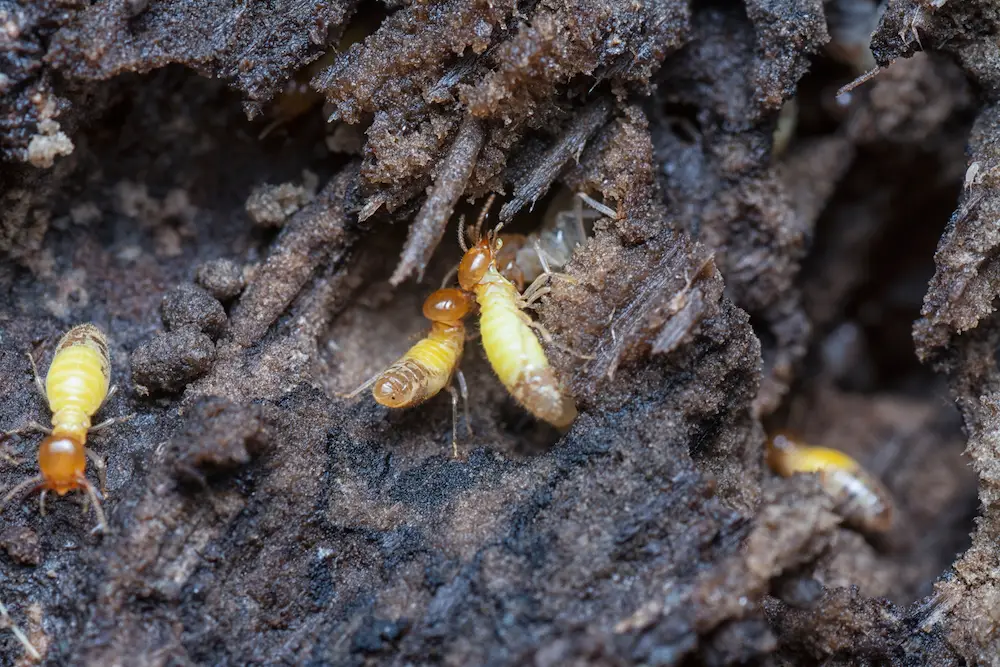
A coordinated colony can keep functioning even when some workers are lost. Ants can send new foragers, wasp colonies can continue maintaining the nest, and termite workers can remain concealed while the colony persists. Treating only the individuals in sight may barely affect the larger population.
The more useful question is where the group is coming from. A professional inspection looks beyond visible activity to nesting areas, entry points, moisture, food sources, and other factors that help an infestation continue.
Look for Patterns, Not Just Individual Pests
Repeated trails, steady traffic to a wall opening, recurring activity around the same food source, or insects continually appearing after cleanup can all suggest a larger issue. Those patterns provide more information than a single pest sighting.
Green Pest Services provides residential pest control for ants, wasps and bees, roaches, spiders, rodents, and other common pests. When a colony or population is established, identifying the pest and its source helps create a treatment plan that addresses more than the workers you happen to see.
When the Whole Colony Is the Problem
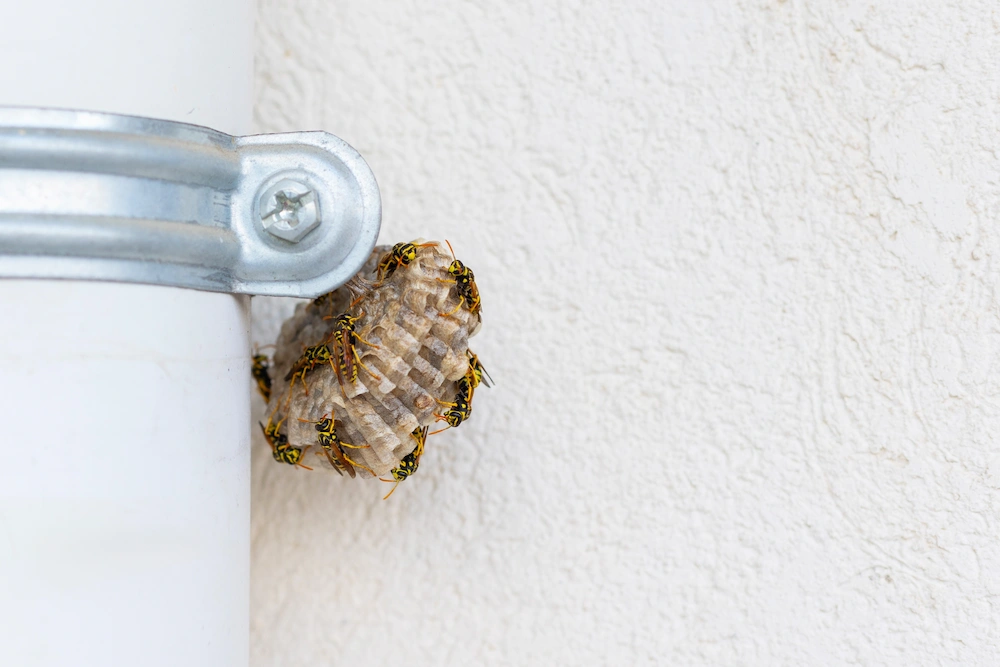
Teamwork is a major reason ants, termites, and social stinging insects are so successful. Their colonies can divide responsibilities, communicate, protect nesting sites, and keep operating while individual workers come and go.
If the same pests keep returning, do not assume each sighting is a separate event. Recurring activity may be connected to a nest or a larger population nearby. Addressing that source is the difference between chasing individual pests and dealing with the infestation itself. For a free quote on our targeted pest control services, contact us today!
Citations
Social vs. solitary insects. (n.d.). Summit Wildlife Removal. Retrieved August 17, 2026, from https://www.summitwildliferemoval.com/about-us/blog/social-vs-solitary-insects/
Spotted Lanternflies Are the Worst Garden Pests
Spotted Lanternflies Are the Worst Garden Pests Spotted Lanternflies Are the Worst Garden Pests Summary: Spotted lanternflies drain sap from trees and vines, [...]
How Clogged Gutters Lead to Pest Problems
How Clogged Gutters Lead to Pest Problems How Clogged Gutters Lead to Pest Problems Summary: Clogged gutters trap standing water and decomposing debris [...]
Wasps Are Busy in Early Fall: Here’s Why
Wasps Are Busy in Early Fall: Here’s Why Wasps Are Busy in Early Fall: Here’s Why Summary: Wasp colonies peak in size during [...]
Pests That Work in Teams: Why Social Pests Are Harder to Ignore
Pests That Work in Teams: Why Social Pests Are Harder to Ignore Pests That Work in Teams: Why Social Pests Are Harder to Ignore [...]
How to Prevent Flies Inside and Out: Make Your Home Less Attractive
How to Prevent Flies Inside and Out: Make Your Home Less Attractive How to Prevent Flies Inside and Out: Make Your Home Less Attractive [...]
5 Pests That Love Crawl Spaces and Why They Move In
5 Pests That Love Crawl Spaces and Why They Move In 5 Pests That Love Crawl Spaces and Why They Move In Summary: [...]