
How Clogged Gutters Lead to Pest Problems
How Clogged Gutters Lead to Pest Problems
Summary: Clogged gutters trap standing water and decomposing debris that attract mosquitoes, ants, termites, and rodents. This guide explains how clogged gutters lead to pest problems and what to do before fall leaf drop makes it worse.
Gutters rarely get much attention until they start overflowing, but a clogged gutter system does far more than cause water damage. Leaves, twigs, and decomposing debris trapped in a gutter create exactly the kind of food, moisture, and shelter that draws pests toward the roofline of a home, whether that home is in Alexandria, Chantilly, or anywhere else across Northern Virginia.
Here is how clogged gutters lead to pest problems, and why fall, when leaf drop is at its heaviest, is the season this issue tends to show up the most.
Standing Water and Decomposing Debris
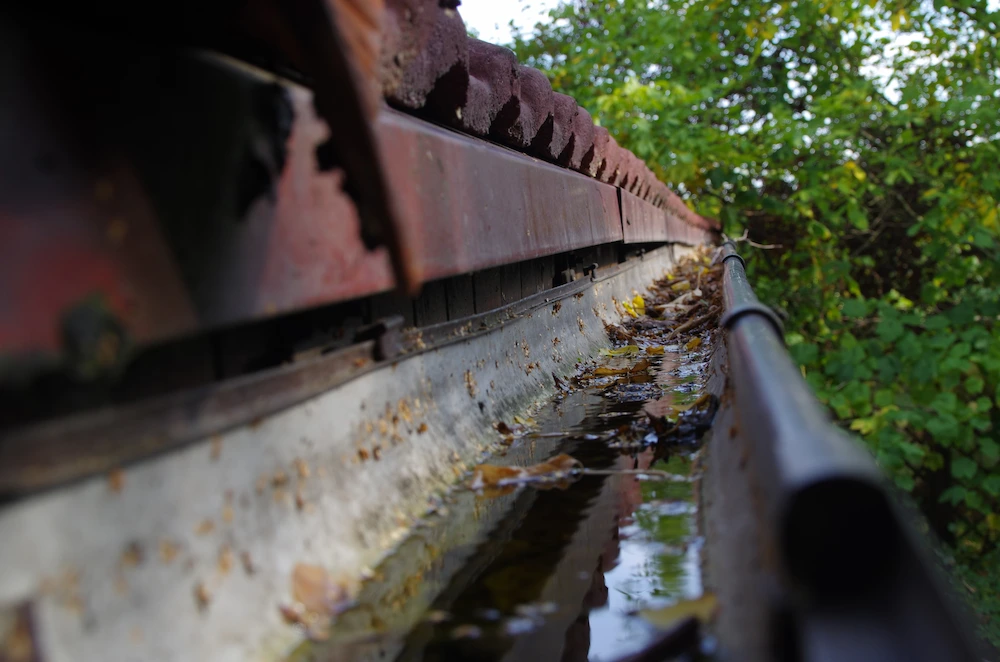
A clogged gutter holds water long after a storm has passed, and standing water is one of the strongest attractants for mosquitoes. Even a small pool sitting in a blocked gutter section can support a mosquito breeding cycle, adding a source of activity that many homeowners never think to check, since most people look for standing water at ground level rather than several feet up along the roofline.
It does not take much water to matter here either. Mosquitoes can complete their breeding cycle in a pool of water not much larger than a bottle cap, which means even a partially clogged gutter section that only holds water for a few days after rain can still support several generations of mosquitoes over the course of a season.
Wet, decaying leaves inside a clogged gutter break down slowly and create an environment that carpenter ants, termites, and various beetles find attractive. That decomposing material offers both moisture and organic matter, which is a combination several wood destroying and nuisance insects are specifically drawn to. Over time, a gutter that consistently holds moisture against the fascia board can also contribute to wood rot, which creates an even more direct entry point for pests looking to get into the structure itself.
Carpenter ants in particular are drawn to wood that has already started softening from moisture damage, since it is far easier for them to excavate than solid, dry lumber. A fascia board that has been damp for a season or two behind a clogged gutter is often exactly the kind of wood a carpenter ant colony looks for when deciding where to expand a nest.
- Visible plant growth or moss inside the gutter channel.
- Water stains or soft spots on the fascia board beneath the gutter.
- Increased mosquito activity near the roofline after rain.
- Ant or termite activity concentrated near a downspout.
Rodents Take Advantage Too
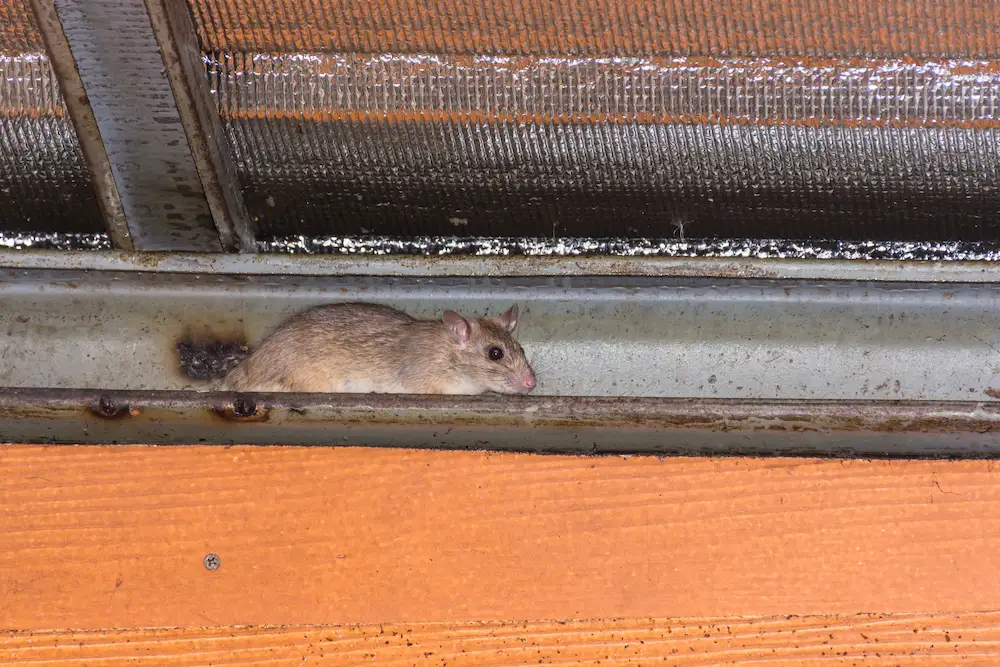
Overflowing gutters can create damp conditions along the roofline that make nearby entry points, like gaps around fascia boards or soffits, more appealing to rodents seeking a way into the attic. A gutter that consistently overflows in the same spot is worth checking not just for water damage but for pest activity in that immediate area as well.
Squirrels and rats are both capable of gnawing through wood that has already been softened by consistent moisture, which means a fascia board damaged by an overflowing gutter can go from a minor repair to an active entry point faster than most homeowners expect. Once one section has been chewed open, it tends to get reused and widened rather than abandoned.
A rodent control inspection can help determine whether rodents have already taken advantage of moisture damage near a gutter line, particularly on older homes with wood fascia and soffits that have not been replaced in some time.
Fall Leaf Drop and Keeping Gutters Clear
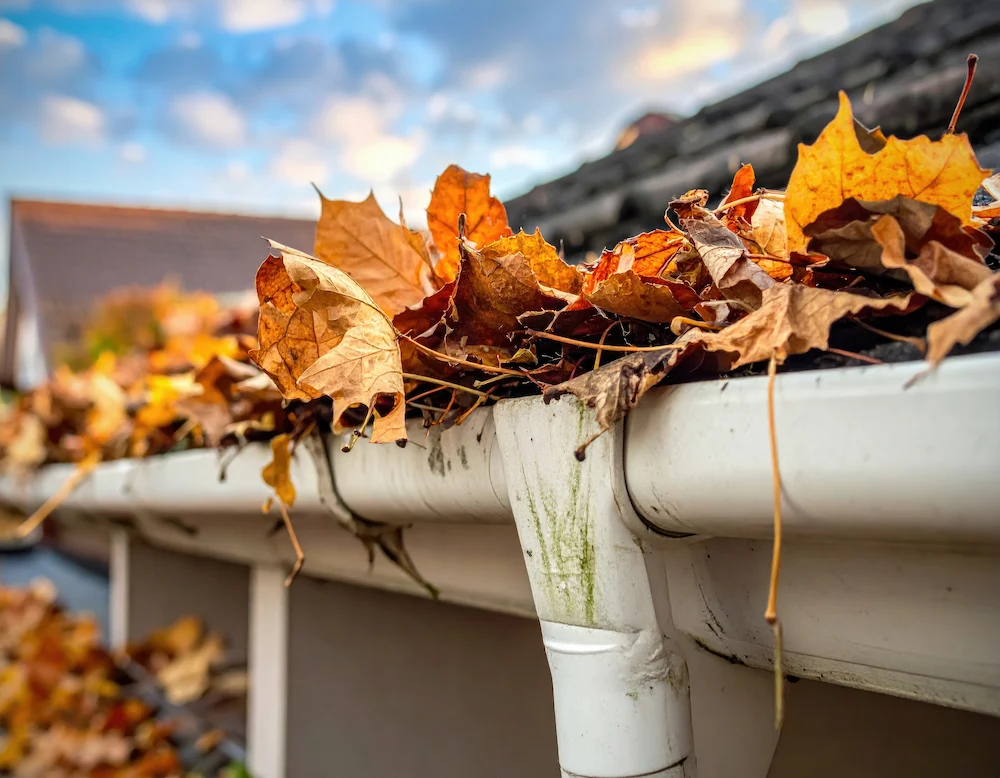
Virginia’s mix of deciduous trees means gutters can fill with leaves faster in the fall than at almost any other point in the year. A gutter cleaned in early September can be clogged again within weeks if leaf drop is heavy, which is why a single fall cleaning is often not enough on properties with significant tree cover, common throughout Chantilly and the surrounding wooded subdivisions.
Oaks and maples, both common throughout Northern Virginia neighborhoods, tend to drop leaves over an extended period rather than all at once, which is part of why a gutter cleaned in September can look just as full again by mid October. Properties with a lot of overhanging tree cover should plan on checking gutters more than once during this stretch rather than assuming a single cleaning will hold.
Clearing gutters at least twice during peak leaf drop, checking that downspouts direct water well away from the foundation, and installing gutter guards on properties with heavy tree cover all reduce how much debris accumulates in the first place. Trimming back branches that hang directly over the roofline also cuts down on how quickly a gutter refills after cleaning.
Downspouts deserve just as much attention as the gutter channel itself, since a clogged downspout can back water up into the gutter even after the channel itself has been cleared. Running water through the system after cleaning is a simple way to confirm it is actually draining properly rather than just assuming the job is done.
Why This Is Worth Fixing Before Winter

Pests that establish themselves near a damp roofline in the fall often stay put through the winter, since the moisture and shelter conditions rarely improve on their own. Addressing clogged gutters now, before winter weather makes roof access harder, prevents a maintenance issue from turning into an ongoing pest problem.
Homes with a lot of mature tree cover tend to need this kind of fall gutter check more than once a season, since a single cleaning rarely holds up through a heavy leaf drop. Once ice starts forming in colder months, a gutter that is already clogged is also more likely to develop ice dams, which can force water back under roof shingles and create the kind of interior moisture problem that draws pests indoors rather than just around the roofline.
Scheduling gutter maintenance around the same time as other fall home tasks, like checking weatherstripping or servicing the HVAC system, makes it easier to remember and less likely to slip until a homeowner is already dealing with an overflow or an active pest problem near the roof.
Fix the Gutters Before the Pests Move In
A clogged gutter is rarely just a water damage risk. By the time it is overflowing consistently, it has likely already created the kind of moisture and debris that mosquitoes, ants, and rodents are looking for near a roofline.
If gutter related moisture has already led to pest activity around your Chantilly home, Green Pest’s Chantilly pest control team can address both the pests and help identify what conditions are drawing them in before the problem settles in for winter. Whether you live in Virginia, Maryland, or DC, contact us for a free quote on our efficient services!
Citations
The hidden link between clogged gutters and pest problems. (n.d.). Squeegee Pro. Retrieved September 14, 2026, from https://www.squeegeepro.com/blog/the-hidden-link-between-clogged-gutters-and-pest-problems/
How Clogged Gutters Lead to Pest Problems
How Clogged Gutters Lead to Pest Problems How Clogged Gutters Lead to Pest Problems Summary: Clogged gutters trap standing water and decomposing debris [...]
Wasps Are Busy in Early Fall: Here’s Why
Wasps Are Busy in Early Fall: Here’s Why Wasps Are Busy in Early Fall: Here’s Why Summary: Wasp colonies peak in size during [...]
Pests That Work in Teams: Why Social Pests Are Harder to Ignore
Pests That Work in Teams: Why Social Pests Are Harder to Ignore Pests That Work in Teams: Why Social Pests Are Harder to Ignore [...]
How to Prevent Flies Inside and Out: Make Your Home Less Attractive
How to Prevent Flies Inside and Out: Make Your Home Less Attractive How to Prevent Flies Inside and Out: Make Your Home Less Attractive [...]
5 Pests That Love Crawl Spaces and Why They Move In
5 Pests That Love Crawl Spaces and Why They Move In 5 Pests That Love Crawl Spaces and Why They Move In Summary: [...]
What Attracts Wasps to Your Yard? Common Reasons They Keep Coming Back
What Attracts Wasps to Your Yard? Common Reasons They Keep Coming Back What Attracts Wasps to Your Yard? Common Reasons They Keep Coming Back [...]